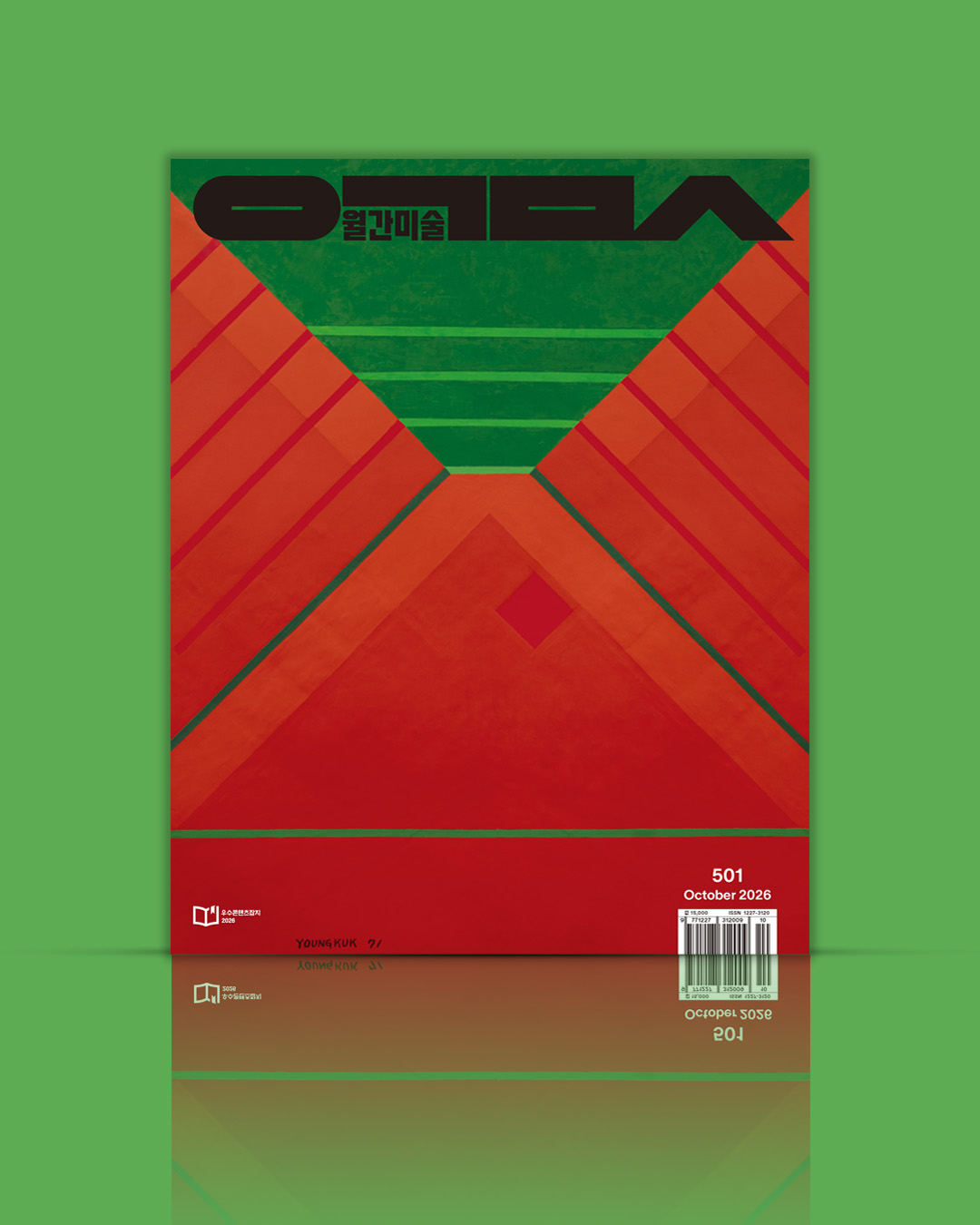
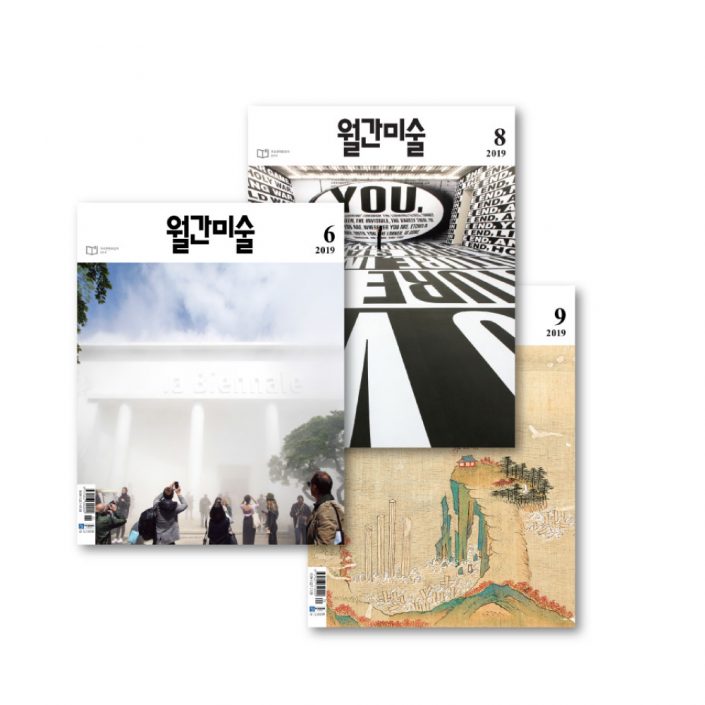
OUT NOW! 월간미술 10월호
한국의 비엔날레는 어떻게 계속되어야 하는가?
한국의 비엔날레는 빠르게 늘어났다. 광주와 부산에서 시작된 이래 도시와 장르를 기반으로 한 다양한 국제전이 등장했다. 그동안 비엔날레는 한국 미술을 국제미술계와 연결하고 새로운 작가와 담론을 소개하는 장이자, 지역문화 활성화와 도시 브랜딩을 위한 공공사업으로 기능해 왔다. 동시에 ‘비엔날레 난립’, ‘차별성 부족’, ‘지역과 동떨어진 국제전’, ‘일회성 행사’라는 비판도 되풀이됐다.
이제 질문은 “이렇게 많은 비엔날레가 필요한가”에서, “이미 존재하는 비엔날레가 어떻게 계속되어야 하는가”로 옮겨갈 필요가 있다. 우리가 비엔날레에 국제화의 역할을 기대했던 예전과 2026년 오늘의 조건은 같지 않다. 미술관의 국제전과 아트페어, 다양한 교류 프로그램이 일상화된 지금, 비엔날레만이 할 수 있는 일은 무엇인가. 막대한 공공재원과 인력, 시간이 투입되는 행사가 무엇을 생산하고 축적해야 다음 회를 다시 열 이유를 만들 수 있는가.
『월간미술』은 올해 광주·부산·경기도자 비엔날레의 현장에서 이 질문을 시작한다. 각 전시가 개최 도시의 역사와 현재를 어떻게 읽고 있는지, 그 해석이 작품과 장소, 신작 제작과 지역 미술계와의 관계 속에서 어떻게 구현되는지를 살핀다. 동시에 관람객 수나 경제효과만으로 포착하기 어려운 성과, 예술의 자율성과 행정의 관계, 매회 교체되는 조직 속에서 경험과 전문성을 축적하는 방법을 묻는다.
OUT NOW! Monthly Art Oct(vol.501)
How Can Korea’s Biennales Sustain Themselves?
Korean biennales have proliferated rapidly. Beginning with Gwangju and Busan, a wide range of international exhibitions have emerged, rooted in different cities and artistic genres. Over the years, biennales have served as platforms for connecting Korean art with the international art world and introducing new artists and discourses, while also functioning as public initiatives for revitalizing regional culture and promoting city branding. At the same time, criticisms have repeatedly been raised over the “proliferation of biennales,” “lack of distinctiveness,” “international exhibitions irrelevant to their local contexts,” and “one-off events.”
The question now demands a shift from how many biennales are needed to why those that already exist should continue. The conditions in 2026 are fundamentally different from when biennales served primarily to connect the local scene to the international art world. Now that international exhibitions at museums, art fairs, and various exchange programs have become commonplace, what can biennales alone do? Beyond presenting a single exhibition event, what must these projects—which demand vast amounts of public funding, labor, and time—produce and accumulate to justify another edition?
Monthly Art begins exploring these questions on-site at this year’s Gwangju Biennale, Busan Biennale, and Gyeonggi Ceramics Biennale. We examine how each exhibition interprets the history and present of its host city, and how those interpretations take shape through artworks, sites, new commissions, and relationships with the local art scene. At the same time, we ask about achievements that are difficult to capture through visitor numbers or economic impact alone: the relationship between artistic autonomy and administration, and ways of accumulating experience and expertise within organizations that are restructured with each edition. The continuity of a biennale is not equivalent to perpetuating biennale repetition. After one edition ends, what remains—of the artworks, research, archives, people, relationships, and experiences—and what is carried forward into the next? If Korean biennales are to continue, the reasons for their continuation must also be created anew each time.
〉Monthly Art Oct(vol.501)



 https://monthlyart.com/wp-content/uploads/2026/10/Ipeh-Nur-_Ombak-belum-Tidur_-2024.jpg
2362
3543
monthlyart
https://monthlyart.com/wp-content/uploads/2024/07/제목을-입력해주세요_-001-10-1.png
monthlyart2026-10-01 17:01:172026-10-01 17:50:10아트 자카르타 2026, 아시아의 미술 생태계를 잇는 플랫폼
https://monthlyart.com/wp-content/uploads/2026/10/Ipeh-Nur-_Ombak-belum-Tidur_-2024.jpg
2362
3543
monthlyart
https://monthlyart.com/wp-content/uploads/2024/07/제목을-입력해주세요_-001-10-1.png
monthlyart2026-10-01 17:01:172026-10-01 17:50:10아트 자카르타 2026, 아시아의 미술 생태계를 잇는 플랫폼