

람한 Ram Han
Ram Han as Persona
Jeongeun Oh Art Critic
Artist
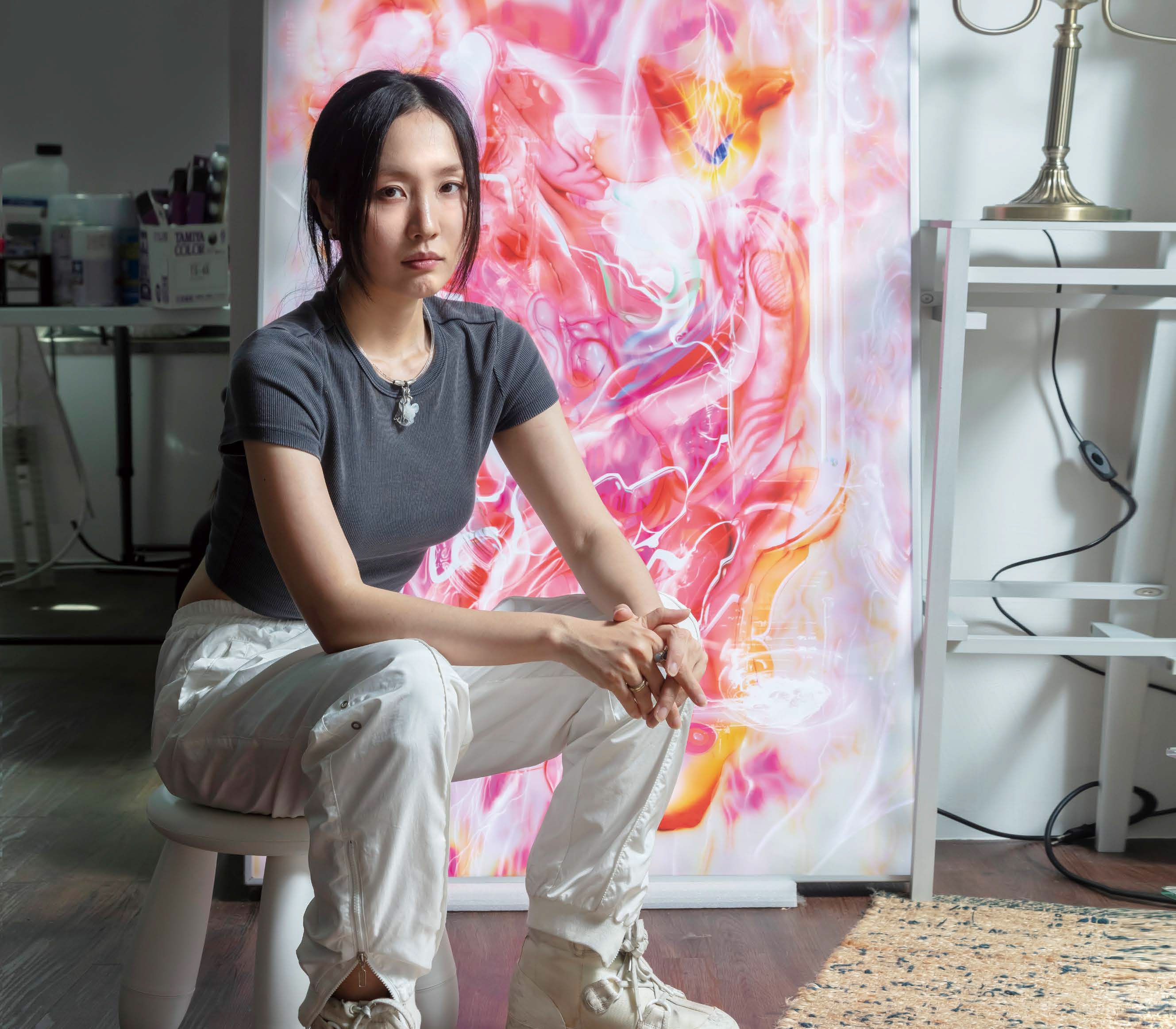
Ram Han/ b. 1989 Ram Han is an artist based in Seoul, working across a wide range of fields both in Korea and internationally. Han began to be formally recognized within the contemporary art scene following his solo exhibition Nightcap (Your Mana, 2017). His subsequent solo exhibition Upcoming (Whistle, 2020) further expanded his practice. He has participated in numerous group exhibitions, including Ghost Arm (Seoul Museum of Art, Buk Seoul, 2018), Fantasia (Steve Turner Gallery, Los Angeles, 2019), the Busan Biennale (2020), and SF2021: Fantasy Odyssey (Seoul Museum of Art, Buk Seoul, 2021)
Ram Han as Persona
Jeongeun Oh Art Critic
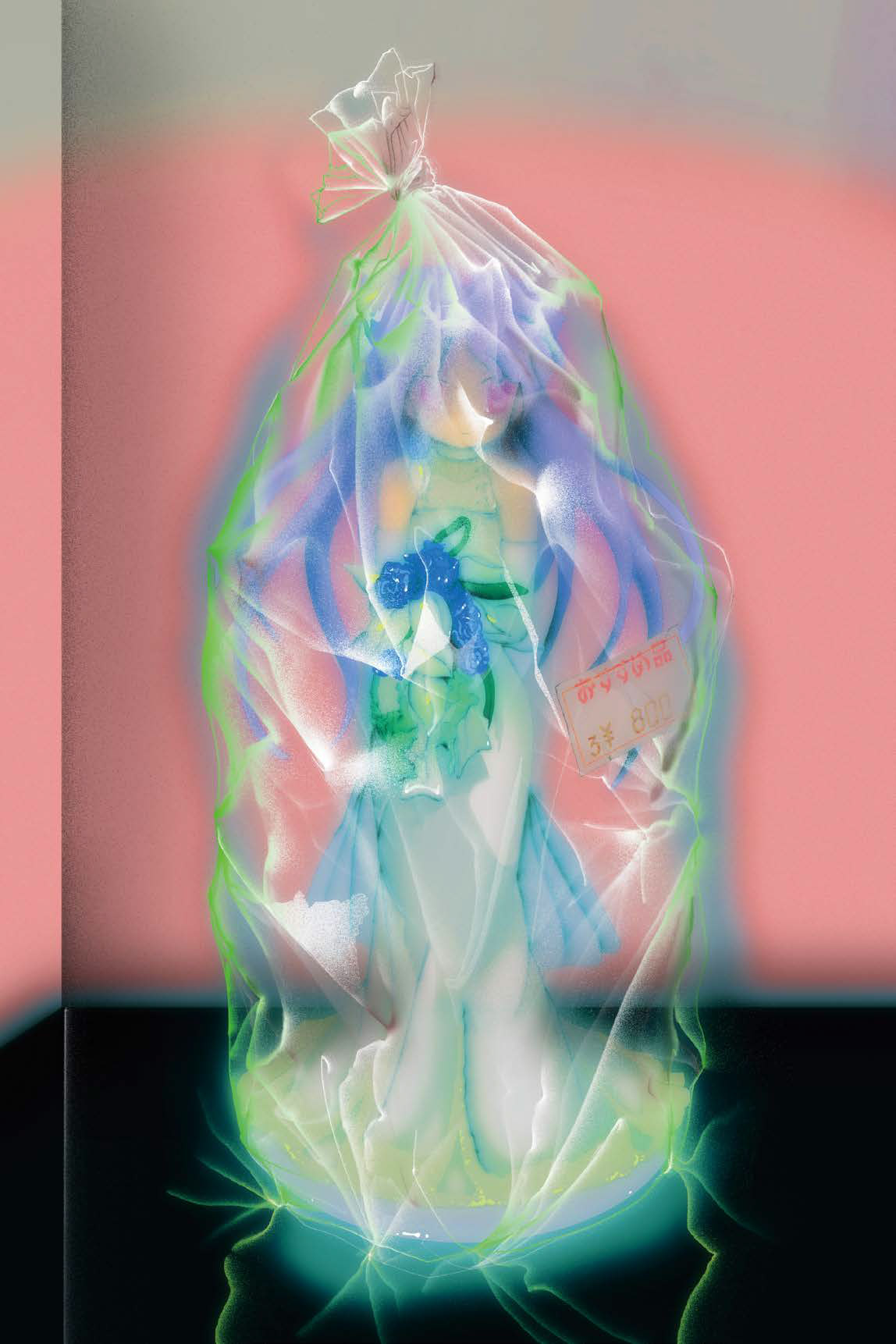
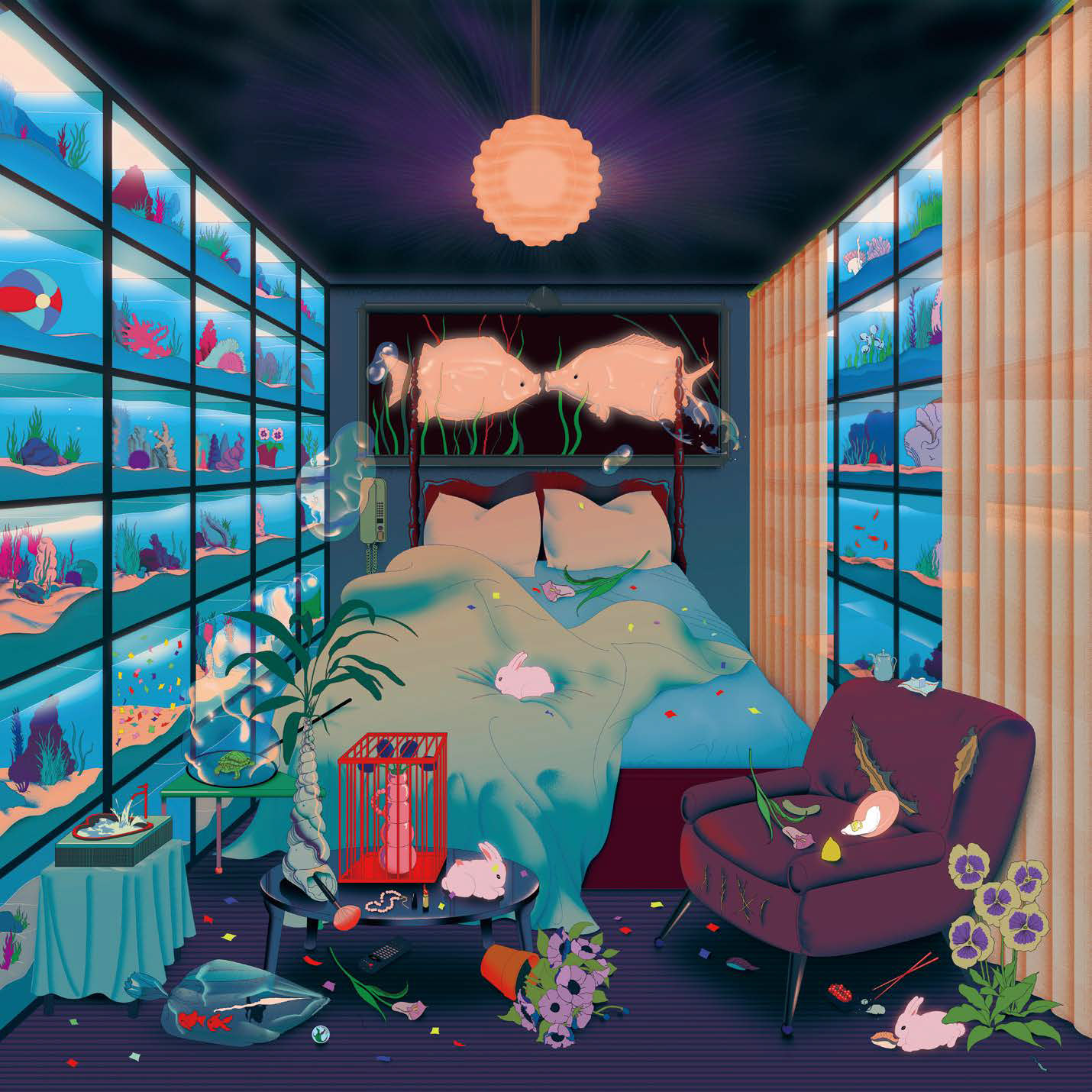
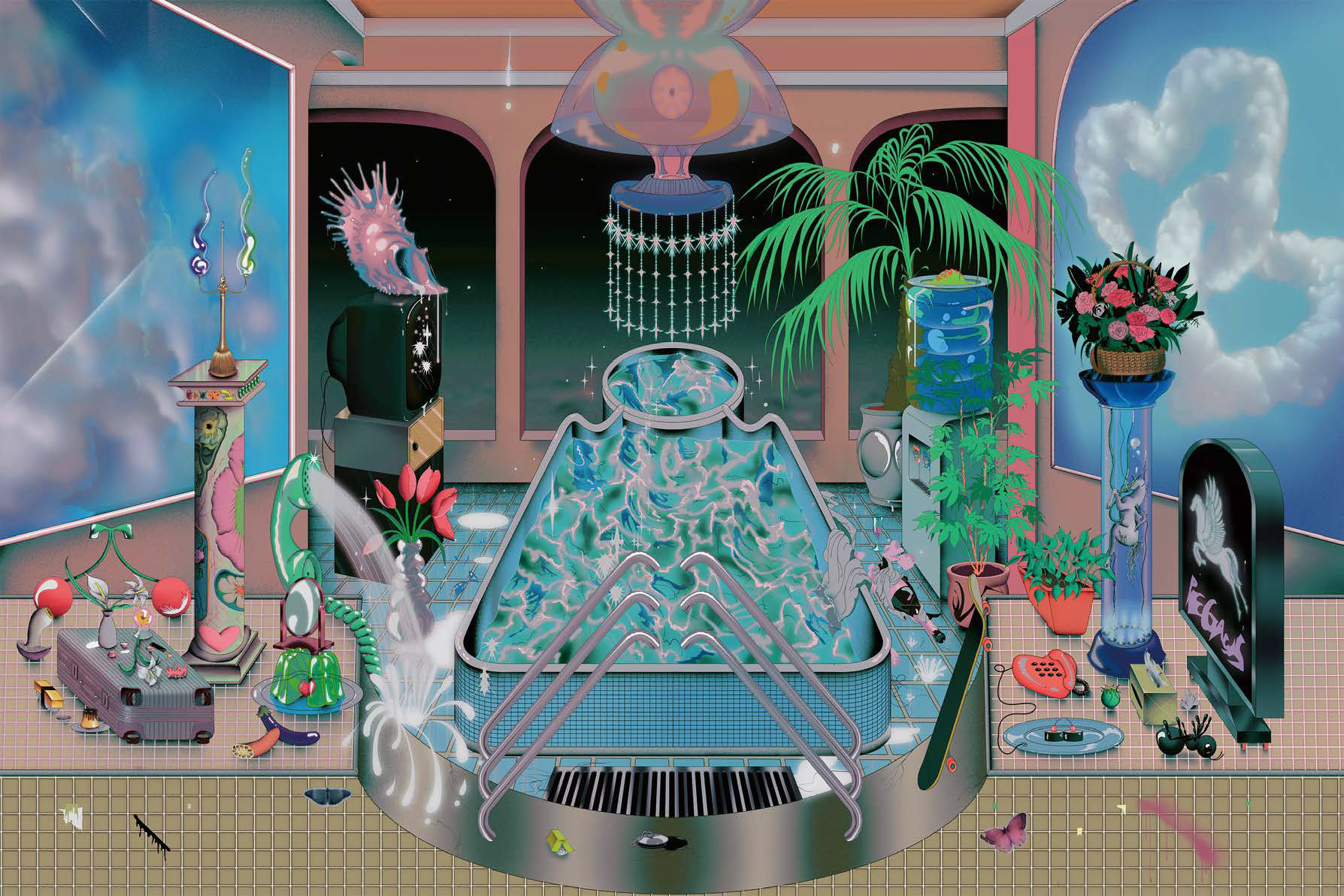
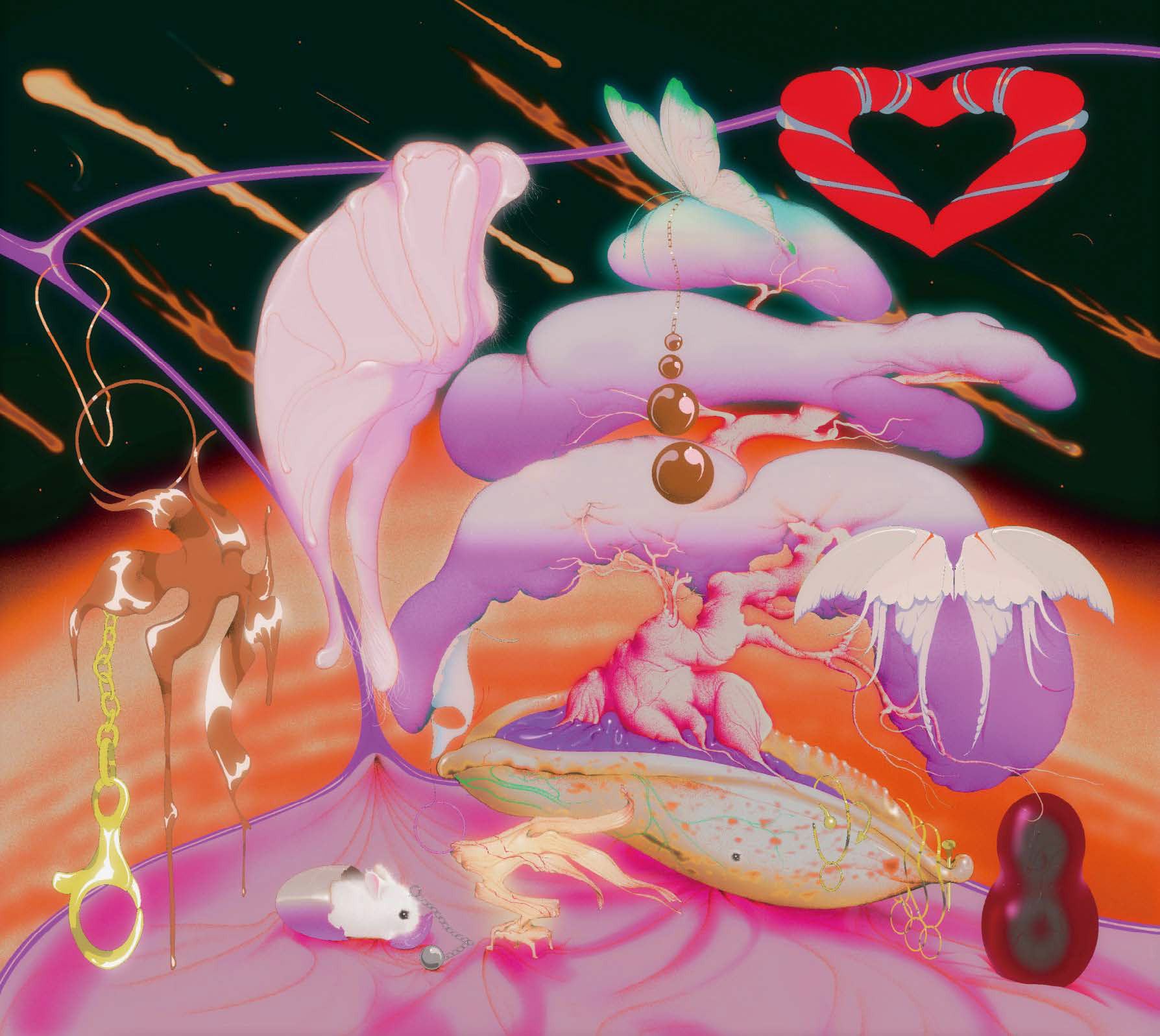
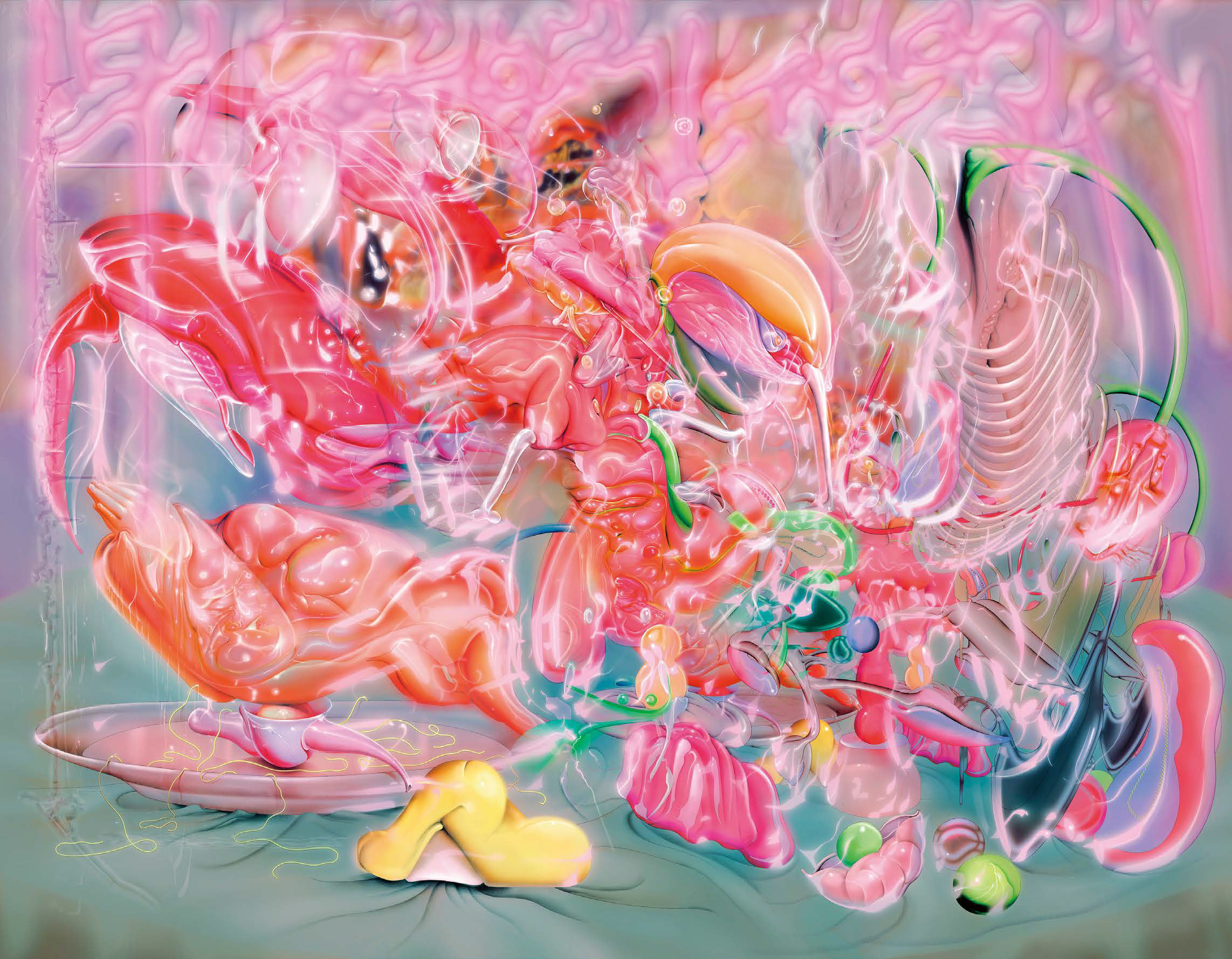
A flat and smooth-surfaced painting blossoms in our retinas, radiating outward from the innumerable particles of an LED panel. This delineation done in psychedelic color recalls the neon signs of some metropolis to the accompaniment of a city pop soundtrack. Within the artificial lighting sprawls the distinctive icon of misshapen organisms and objects, their bodies entangled as one. We have here a grotesque coexistence of the phantasms of science fiction, the fabrication added into fiction, and the traces left behind within deteriorated memories. The end result is a provocative image that one would be hard-pressed to explicate as something clear-cut or to instill with a linear narrative.
Having launched her career as an independent artist with her first solo exhibition, Ram Han: Nightcap (YOUR MANA, 2017), Ram Han had no personal connection to the generational discourse of the contemporary art world that would periodically rear its head only to die out within a few years. Rather, it was after Phantom Arm (Seoul Museum of Art, 2018) and her invitation to PACK 2018: Tinker Bell’s Journey (Space FourOneThree, 2018), Ghost Shotgun (Audio Visual Pavilion, 2019), and other exhibitions that Ram came to experience after the fact the spaces that feature in preceding discourse, eventually finding a place of her own as an invited and affiliated artist at commercial galleries. In between, Ram showcased major commissioned work at the Busan Biennale 2020: Exhibition in Ten Chapters and Five Poems (Old Town Busan and et cetera, 2020), SF 20201: A Fantasy Odyssey (Buk-Seoul Museum of Art, 2021), and Game Society (National Museum of Modern and Contemporary Art, 2023), all while receiving an introduction within the Discoveries section of Art Basel Hong Kong 2023 on the one hand, and diversifying her resume as she vaulted the implicit hurdles present in established art community by participating in collaborative projects and ad campaigns with numerous corporations—including entertainment agencies and global luxury brands—in addition to herself featuring as a model for fashion magazine photo spreads.
The foundation of Ram’s rapidly accelerating popularity or her brisk-paced alignment with current cultural trends may very well be located across two opposing temporal contexts, the first being the dystopian 2010s, during which South Korea’s younger population was dubbed the 880 Thousand Won Generation/Three Giving-Up (Sampo) Generation and forced to self-support in order to simply survive, and the second being the 2020s, during which the country’s younger population started with the reference of the individually expressive and personal value-driven Generation MZ and surfaced as a noteworthy strata of the new mankind. Under such grim social circumstances—in which despair, far from being overcome, was instead destined to become a contorted mutation via the spiritual enlightenment that follows resignation—we might surmise that Ram’s hybrid aesthetics and multiple profiles have perhaps furnished her contemporaries with an aspirational impetus. To put a finer point to it, the current iteration of Ram stands formulated by the consumption of the new persona known as Ram Han and of the images born out of the work which said persona has generated. Prior to entering the art scene in earnest, Ram gained a word-of-mouth following by posting her work on her blog and social media. A curator’s discovery of Ram’s Instagram account led to an invitation to participate in a gallery exhibition, a turn of events which made it possible for Ram to display physical representations of frames optimized for online environments and thereby carve out a stable foothold under the title of ‘digital painter.’ Divergent from not only illustrators and comic artists but also traditional painters, Ram Han the digital painter took on new forms of rhetoric surrounding changes in medium with herself as juncture.
Around the time that the issues of the gap dividing the younger and older generations in addition to the argument for institutional accountability—once vocalized through emerging art spaces in the Korean art scene—began guttering to a halt, Ram offered an example well-suited for application to the media discourse that cropped up in the ashes of this circumstance. Once the very challenges of sustaining a livelihood and the hopelessness of becoming an artist felt among artists born in the 1980s upon graduating art college took root as a major trend in their own right, this necessitated the freshly minted emergence of both these artists and the artists born in the 1990s who came after them, wherein post-medium issues were bound together with generation theory from a sociological perspective.
Ram underscores her medium through the use of RGB colors that appear all the more stark on digital screens and bring a crisp visibility to the themes of her highly ‘Instagrammable’ work by frequently and intentionally drawing on panels cut in perfect squares. She utilizes her Instagram account to present new work and create a portfolio archive while also platforming photo edits of herself as seen in magazines and advertisements. Ram’s current count of 88 thousand followers quantifies her identity as an influencer. There is, of course, no such thing as consummate realism to be found here. Ram merely happens to use the sway of her artistic style and its ambiguous boundaries as terminology through which she projects our period in time. Thus does the Ram Han persona scintillate, hearkening to the brilliance of the bubble economy aspired to by a public fed up with this age of recession.A flat and smooth-surfaced painting blossoms in our retinas, radiating outward from the innumerable particles of an LED panel. This delineation done in psychedelic color recalls the neon signs of some metropolis to the accompaniment of a city pop soundtrack. Within the artificial lighting sprawls the distinctive icon of misshapen organisms and objects, their bodies entangled as one. We have here a grotesque coexistence of the phantasms of science fiction, the fabrication added into fiction, and the traces left behind within deteriorated memories. The end result is a provocative image that one would be hard-pressed to explicate as something clear-cut or to instill with a linear narrative.
Having launched her career as an independent artist with her first solo exhibition, Ram Han: Nightcap (YOUR MANA, 2017), Ram Han had no personal connection to the generational discourse of the contemporary art world that would periodically rear its head only to die out within a few years. Rather, it was after Phantom Arm (Seoul Museum of Art, 2018) and her invitation to PACK 2018: Tinker Bell’s Journey (Space FourOneThree, 2018), Ghost Shotgun (Audio Visual Pavilion, 2019), and other exhibitions that Ram came to experience after the fact the spaces that feature in preceding discourse, eventually finding a place of her own as an invited and affiliated artist at commercial galleries. In between, Ram showcased major commissioned work at the Busan Biennale 2020: Exhibition in Ten Chapters and Five Poems (Old Town Busan and et cetera, 2020), SF 20201: A Fantasy Odyssey (Buk-Seoul Museum of Art, 2021), and Game Society (National Museum of Modern and Contemporary Art, 2023), all while receiving an introduction within the Discoveries section of Art Basel Hong Kong 2023 on the one hand, and diversifying her resume as she vaulted the implicit hurdles present in established art community by participating in collaborative projects and ad campaigns with numerous corporations—including entertainment agencies and global luxury brands—in addition to herself featuring as a model for fashion magazine photo spreads.
The foundation of Ram’s rapidly accelerating popularity or her brisk-paced alignment with current cultural trends may very well be located across two opposing temporal contexts, the first being the dystopian 2010s, during which South Korea’s younger population was dubbed the 880 Thousand Won Generation/Three Giving-Up (Sampo) Generation and forced to self-support in order to simply survive, and the second being the 2020s, during which the country’s younger population started with the reference of the individually expressive and personal value-driven Generation MZ and surfaced as a noteworthy strata of the new mankind. Under such grim social circumstances—in which despair, far from being overcome, was instead destined to become a contorted mutation via the spiritual enlightenment that follows resignation—we might surmise that Ram’s hybrid aesthetics and multiple profiles have perhaps furnished her contemporaries with an aspirational impetus. To put a finer point to it, the current iteration of Ram stands formulated by the consumption of the new persona known as Ram Han and of the images born out of the work which said persona has generated. Prior to entering the art scene in earnest, Ram gained a word-of-mouth following by posting her work on her blog and social media. A curator’s discovery of Ram’s Instagram account led to an invitation to participate in a gallery exhibition, a turn of events which made it possible for Ram to display physical representations of frames optimized for online environments and thereby carve out a stable foothold under the title of ‘digital painter.’ Divergent from not only illustrators and comic artists but also traditional painters, Ram Han the digital painter took on new forms of rhetoric surrounding changes in medium with herself as juncture.
Around the time that the issues of the gap dividing the younger and older generations in addition to the argument for institutional accountability—once vocalized through emerging art spaces in the Korean art scene—began guttering to a halt, Ram offered an example well-suited for application to the media discourse that cropped up in the ashes of this circumstance. Once the very challenges of sustaining a livelihood and the hopelessness of becoming an artist felt among artists born in the 1980s upon graduating art college took root as a major trend in their own right, this necessitated the freshly minted emergence of both these artists and the artists born in the 1990s who came after them, wherein post-medium issues were bound together with generation theory from a sociological perspective.
Ram underscores her medium through the use of RGB colors that appear all the more stark on digital screens and bring a crisp visibility to the themes of her highly ‘Instagrammable’ work by frequently and intentionally drawing on panels cut in perfect squares. She utilizes her Instagram account to present new work and create a portfolio archive while also platforming photo edits of herself as seen in magazines and advertisements. Ram’s current count of 88 thousand followers quantifies her identity as an influencer. There is, of course, no such thing as consummate realism to be found here. Ram merely happens to use the sway of her artistic style and its ambiguous boundaries as terminology through which she projects our period in time. Thus does the Ram Han persona scintillate, hearkening to the brilliance of the bubble economy aspired to by a public fed up with this age of recession.
A Hybrid Loner
Ram visually delineates the senses in their respective forms. As articulated in the Souvenir Study series (2019-2022), she mingles living organisms and inanimate objects within the same texture and buffs them to a sheen akin to that of a glaze. As articulated in the Case series (2020) and Sky (2022), she portrays human beings, flora, and fauna coming together to share a singular body. Within the world of Ram’s work, fellow feeling arises in a dimension which transcends gender and species. Consider Kiss (2021)—where the eponymous act takes place with an alien partner—or The Last Night of the World (2021)—where a girl, a faceless being, a cat, and a smartphone seem to constitute a congenial family of four. The characters that Ram features in her work assume minority identities and allude to new conceptions.
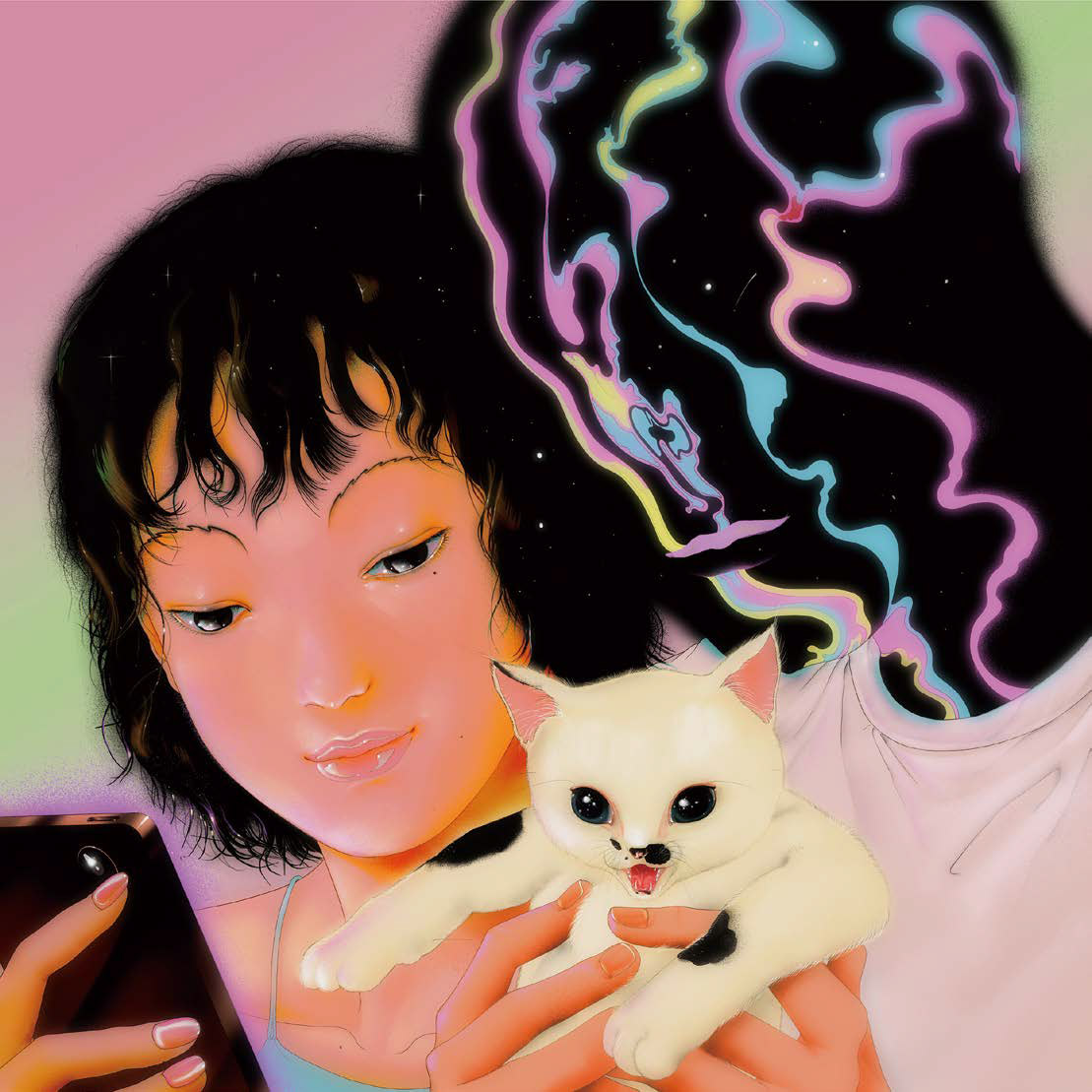
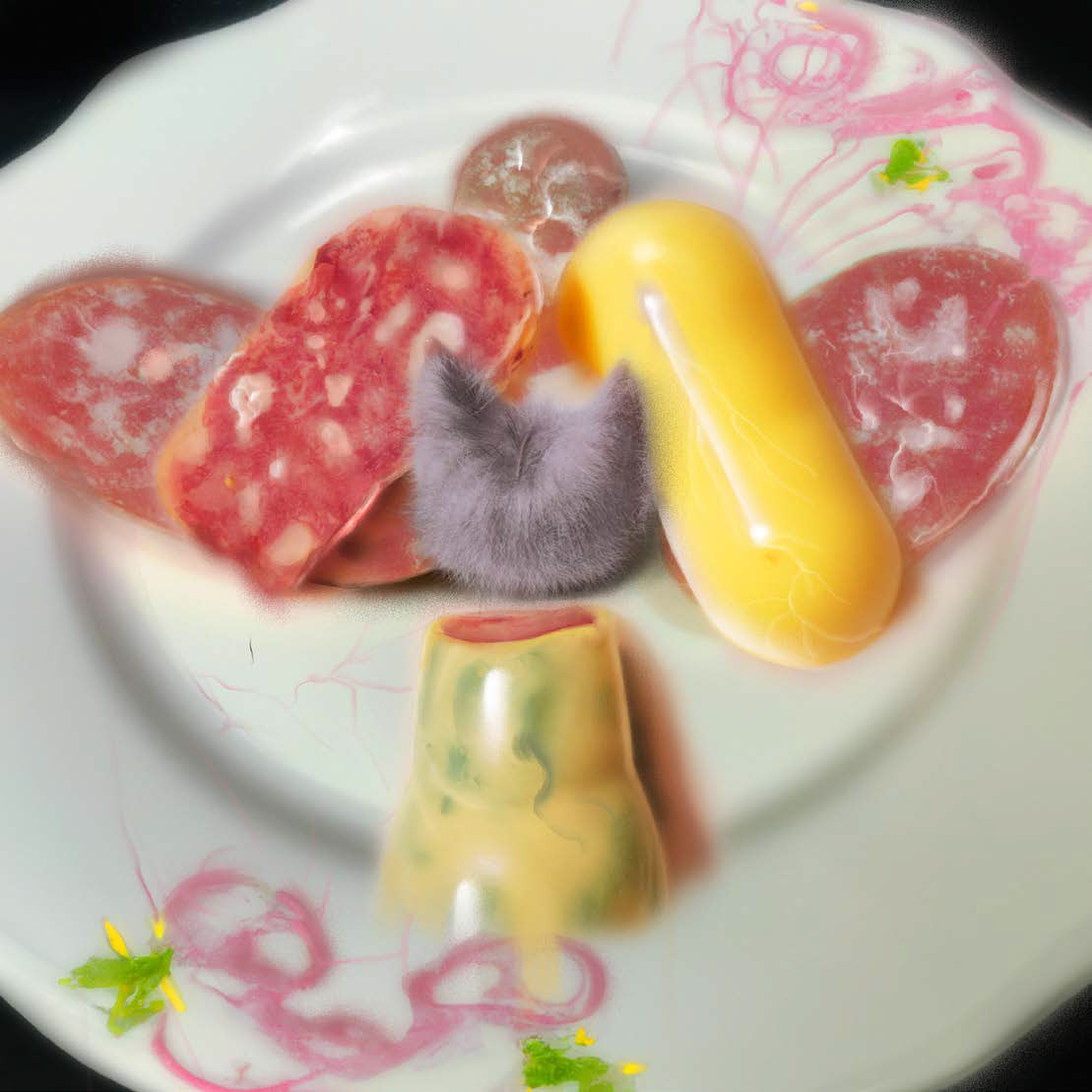
Ram shows no hesitation when it comes to borrowing even from those elements that venture toward the ‘uncanny valley’ generated by artificial intelligence (AI). She believes that “There is much more to be said and told in the precarious intermediate output and seemingly erroneous results created in the process of AI’s attempts to infer a certain image.” Ram seeks to venture beyond the capacities of the digital devices demonstrated in 3D-printed sculpture work such as the Morph series (2022) and in virtual reality games and video work such as Tutorial: How to Uninstall My Twin Sister (2023), bringing the senses of the posthuman brain into her medium for the artist’s use. Her so-called ‘food series’ of Open Sandwich (2022), Salami Platter (2022), and Seafood Pond (2022)—which Ram herself stated consists of ‘pieces made in collaboration with AI’—draw inspiration from the bizarre and nonsensical images generated by AI free from bias.
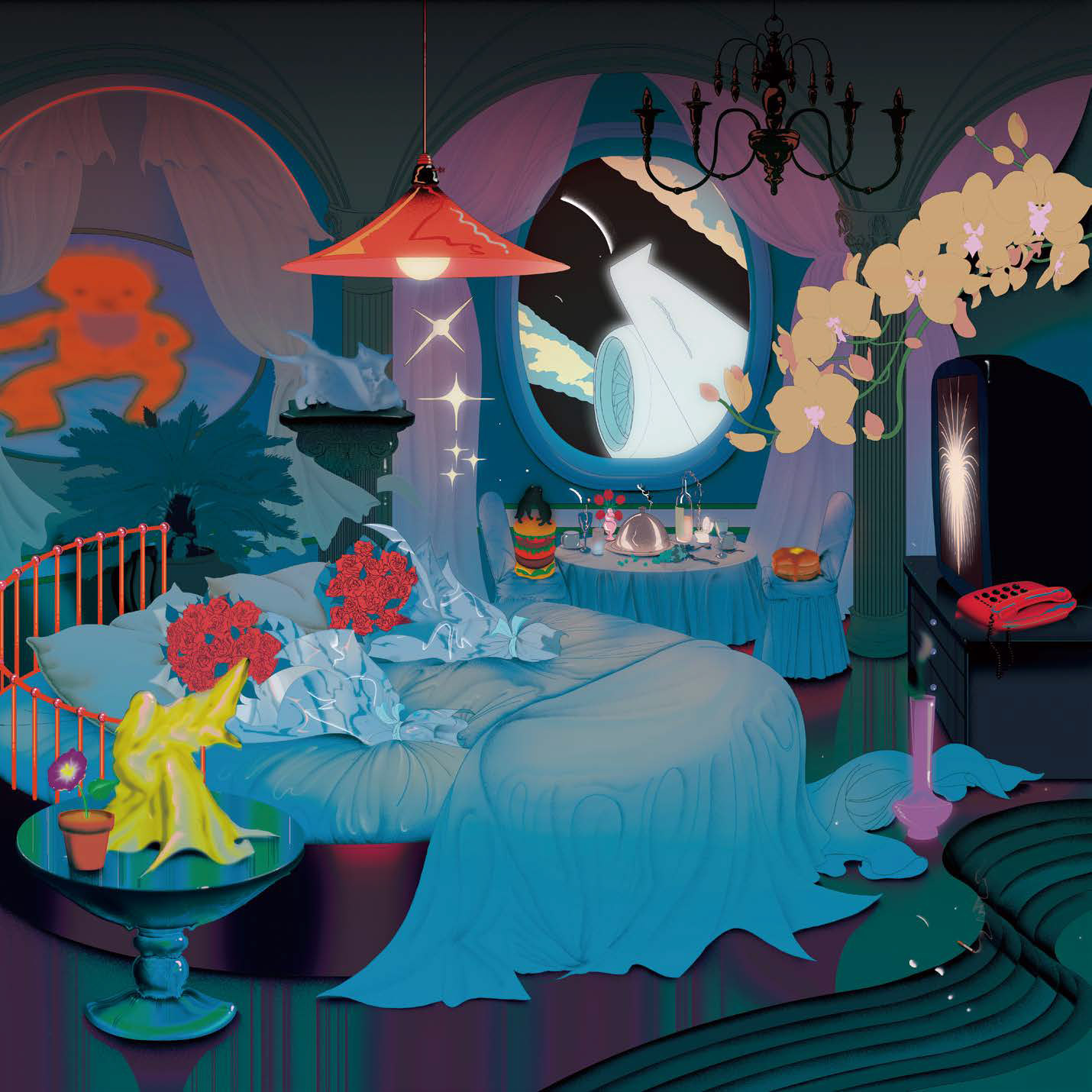
At the same time, Ram has, in conversation with the author and during interviews with multiple media outlets, made both direct and indirect reference to the fact of her wide exposure to a visual culture that encompassed inflammatory and harmful content. She was specifically speaking of the hazy memories stirred up with regard to the comic books, video tapes, and game consoles that she and her peers of the ’80s and ’90s enjoyed, as well as of the visual trauma nested within those memories. Ram has consistently collected and called forth via contemporary media the plaintive traces of psychological images once relegated to having no next of kin. The newly articulated results of her work have a forced cheer about them but are also chaotic and self-contradictory. Take Ram’s digital painting series Roomtype and Loner (2018-2019), for instance, where themed motel rooms and the remnants of desire tangled up indiscriminately therein shine despite their dilapidation and carry a pure beauty amidst their decadence. The artist continues a similar process through the image fragments filling her Instagram feed. Thus do we witness and decipher Ram’s intimacies and the traumas of our time. A firmly rooted rendition of solidarity this may never be, yet at the very least, it enables us to sense that we are not loners.
*This publication was supported by Ministry of Culture, Sports and Tourism Republic of Korea and Korea Arts Management Service
1 Ram Han’s artist notes in Generative Art, 2024
© (주)월간미술, 무단전재 및 재배포 금지


