

오묘초 Omyo CHO
Flesh and Memory
Jeongeun Oh Art Critic
Artist
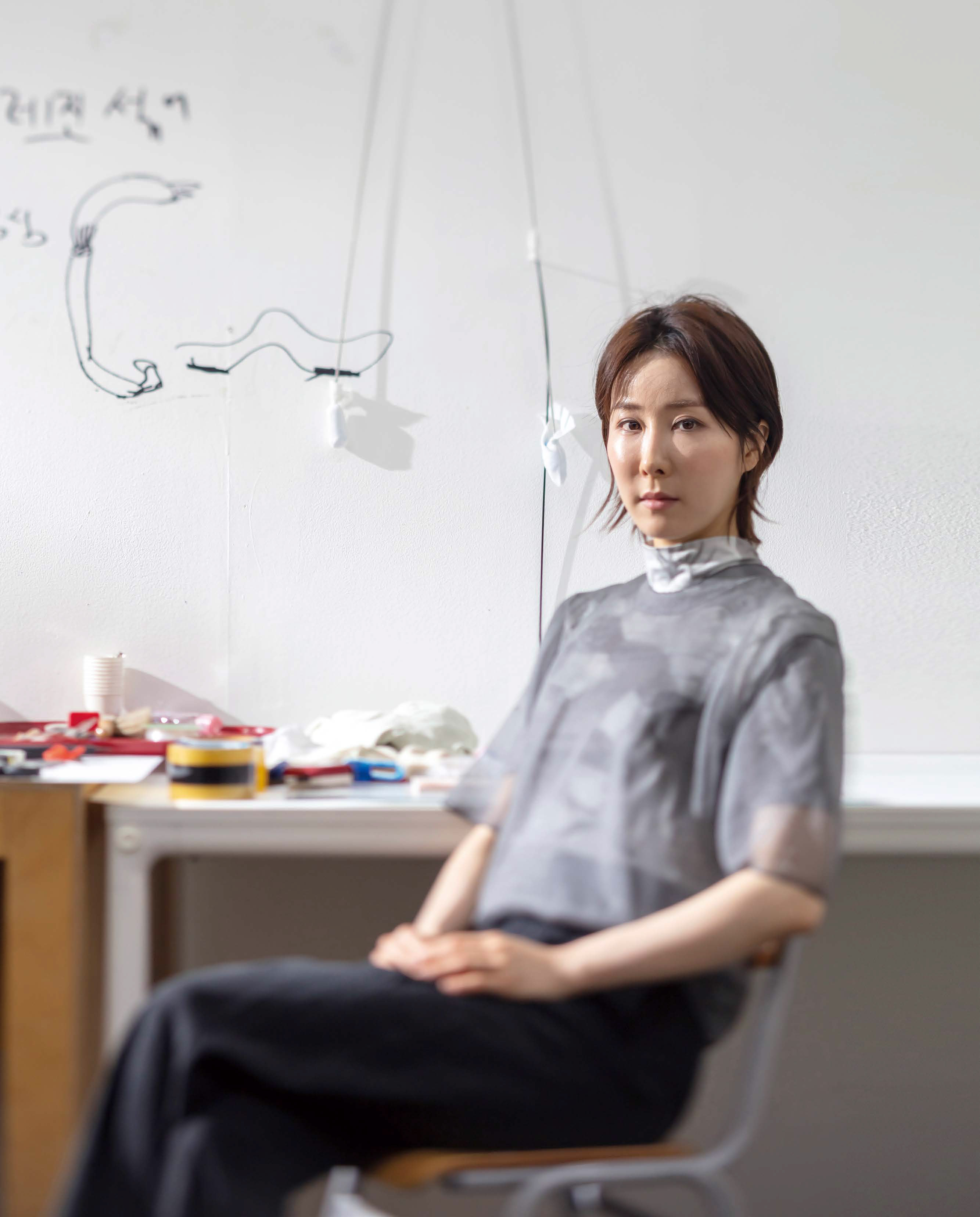
Omyo CHO/ b.1984 Cho Graduated from the Fine Arts Department at Goldsmiths, University of London, was Artist-in residence at the National Museum of Modern and Contemporary Art, Goyang Residency in 2022, and at Seoul Art Space Geumcheon in 2023. Recipient of the Soorim Art Prize in 2020. Major solo exhibitions include Jumbo Shrimp (Daejeon TEMI Arts Center, 2021), TAXIDERMIA (N/A, 2019), Traces of Things Unmentioned (Siidae inn, 2018). Major group exhibitions include Frieze Film (Insa Art Space, 2023), Landscapes (Wooson Gallery, 2023), The Use of Uselessness (Osan Museum of Art, 2022), Shadowland (Amado Art Space, 2021), and many others.
Flesh and Memory
Jeongeun Oh Art Critic
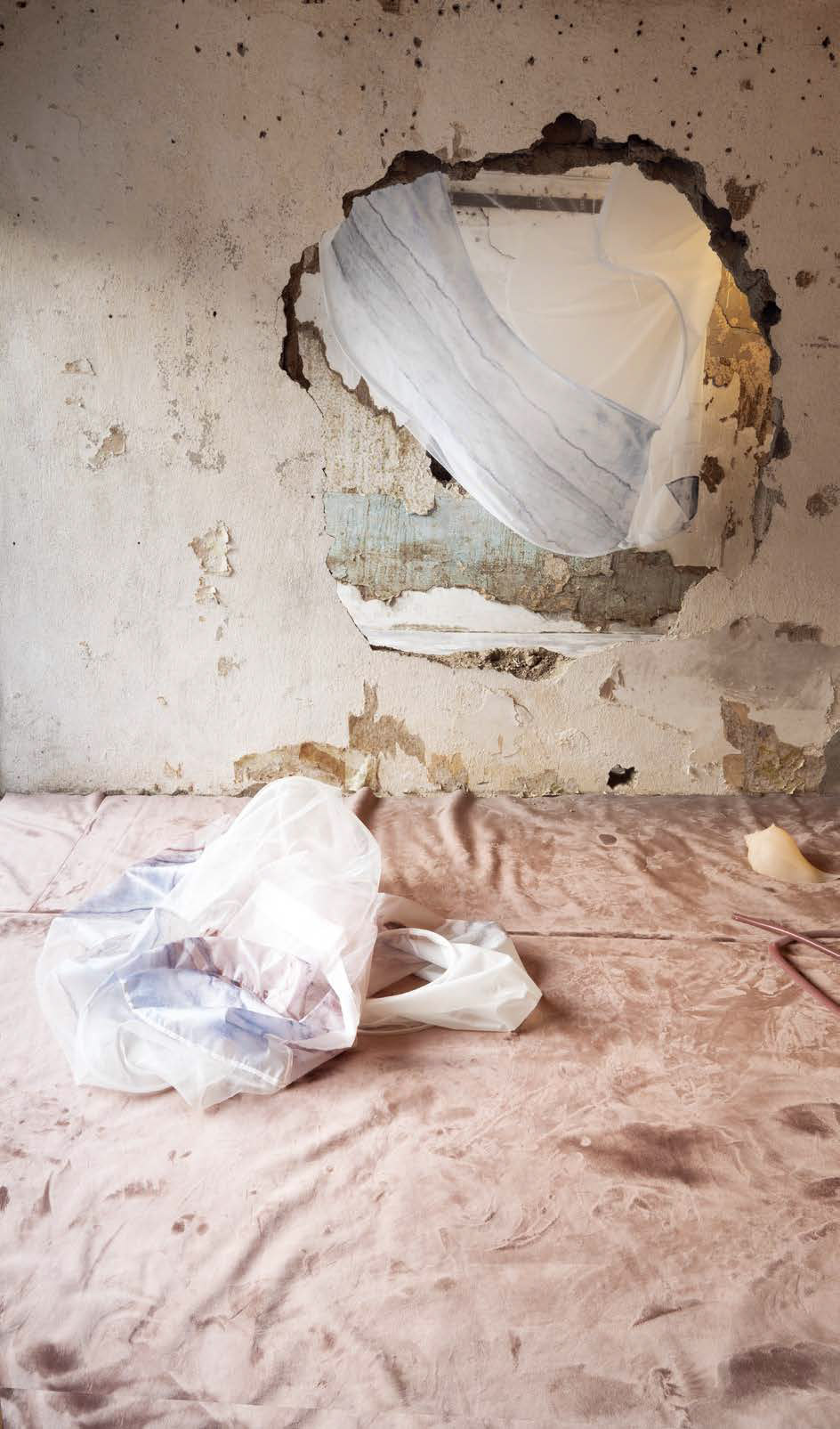
The target area chosen for Omyo Cho’s first solo exhibition, The Trace of Things Unmentioned (subtitled Hermit Crab, 2018) was the ruins of the Sidae Inn located in the Changsin Flophouse Village (jjokbangchon). The inn was a space left utterly abandoned by the fluctuations of life. All that remained was the frigid indifference of its dilapidated structure and the ash-gray concrete walls, with everything but its last trace of poverty and despair having long dissipated. Layer upon layer of wallpaper dotted the long blank walls like rawhide that had shriveled up and adhered to these surfaces. Cho likened said layers to tree rings. We might go so far as to say that she further saw them as a spatial engram and wellspring of artistic inspiration. Cho carried out a literary traversing of the trail left behind by the enshrouded potentialities of such history and created an omnibus novel which spanned reality and fantasy in tandem with the exhibition. Such an approach involved reeling in the literary narratives born out of the particular space and using them to fill in its strata. In one corner of an empty flophouse was situated a conch shell and a speaker, with the soundscape of crashing waves playing to imbue the scene with a different set of reverberations. The artist called into existence as phenomenological entities those so-called ‘things unmentioned’ that have been subject to erasure and exclusion within our cities. In the epilogue of her piece of creative writing, Cho put on a somewhat dark front by stating, “The outward shell is what matters. It makes no difference whether we speak of the conch or the hermit crab or any other life in any other form. Our existence is thus rendered the object of consumption, not that of remembrance.” However, it would seem that what she undertook in truth was to replenish with flesh and memory the void left in the wake of capital’s near-explosive collapsing of community. The sculptures, stories, and rhetoric of social critique which filled the gaunt and skeletal remains of these ruins and the shells devoid of living organisms have proceeded to become a compositional mainstay in Cho’s subsequent work.
A Net of Information
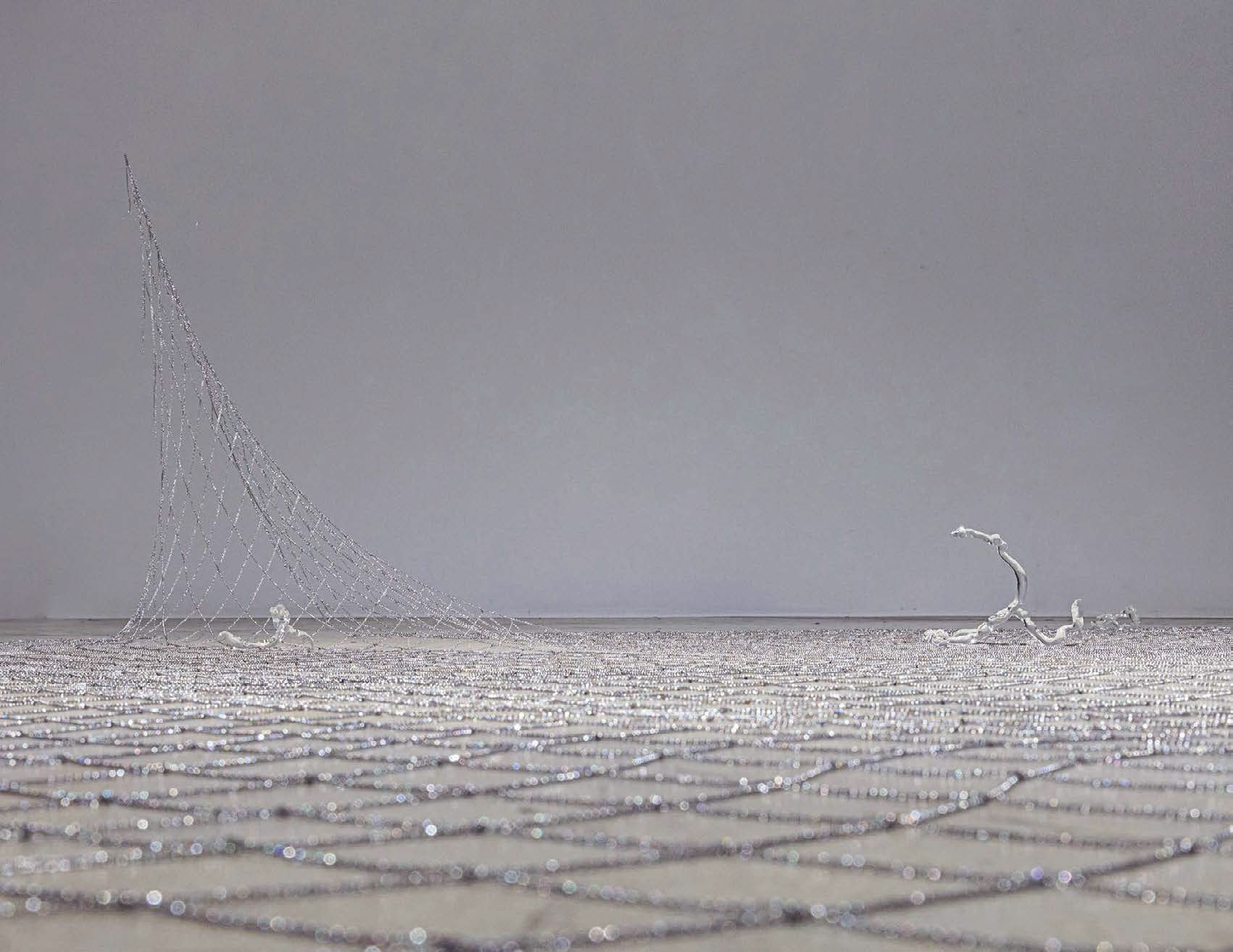
In work that drew on the user authentication test CAPTCHA—aimed at differentiating humans from robots online—Cho pointed out that even the clues we rely on to tell human beings and machines apart are now accumulating in the databases of sprawling digital corporations. She made circuitous reference to the issue of such data byproducts subsisting and being exploited in cloud environments outside the regulation of individual will, giving it form via the methodology of traditional sculpture as seen in the engraving of a CAPTCHA pattern on clay. Once we follow this semiological work completed by the artist while delving into the paradox of digital information carved into fired clay, we are able to divine a representation from within her personal memories that unspools itself in another area of the exhibition space demarcated by one of the original walls. A contemporary sculpture in the shape of a net wrought out of metal chains and glass, it provides us with a representation of an object from Cho’s memory, accompanied by supporting testimony in the artist’s essay notes describing it as being a fragment of fear.
The CAPTCHA is a net of sorts. While superficially a process to ensure secure access for website logins and the like, it is also a fear-inducing net that carries the risk of having its purpose warped. At the same time, Cho does not appear to have unearthed this traumatic piece of her childhood for the sole objective of having us share in a somewhat analogous sense of fear. The net draws the boundary between life and death as a product of the layers which sift through remembrance and oblivion, albeit the absence of absolute dichotomies means that it comes with holes impressed in it. These gaps are yet another key concept required in order to better grasp Cho’s work.
In Search of Future Memory
In Nudi Hallucination, the artist’s contribution to the 2022 group exhibition Data Jungwon, Cho took flesh-like pieces and used them to complete a bio-scientific landscape. The ensuing narrative construct served as a device which imbued these pieces with the future tense. They functioned as symbolic objects that called forth existences unseen outside the bounds of actual objectivity, thereby entangling with spatio-temporality and entering the conceptual realm. If Rosalind Krauss expanded the notion of sculpture into the fields of architecture and landscape to uncover its spatial possibility, Cho’s sculptures differentiate themselves in that they add to Krauss’s work a temporal axis that reveals a four-dimensional arena.
Nudi Hallucination—an unfamiliar sort of sculpture deemed to be alive despite its immobility, held as a series of things conceptualized to be heterogeneous creatures from some point in the future—takes on deeper meaning in relation to Cho’s science fiction novel Memory Searcher. Cho plotted out the novel in question with the help of inspiration from Dr. David Glanzman’s experiments on memory transfer among sea snails. The novel is based in a futuristic society whose currency consists of memories, with memories being consigned to their exchange value and therefore featuring as little more than products for consumption.
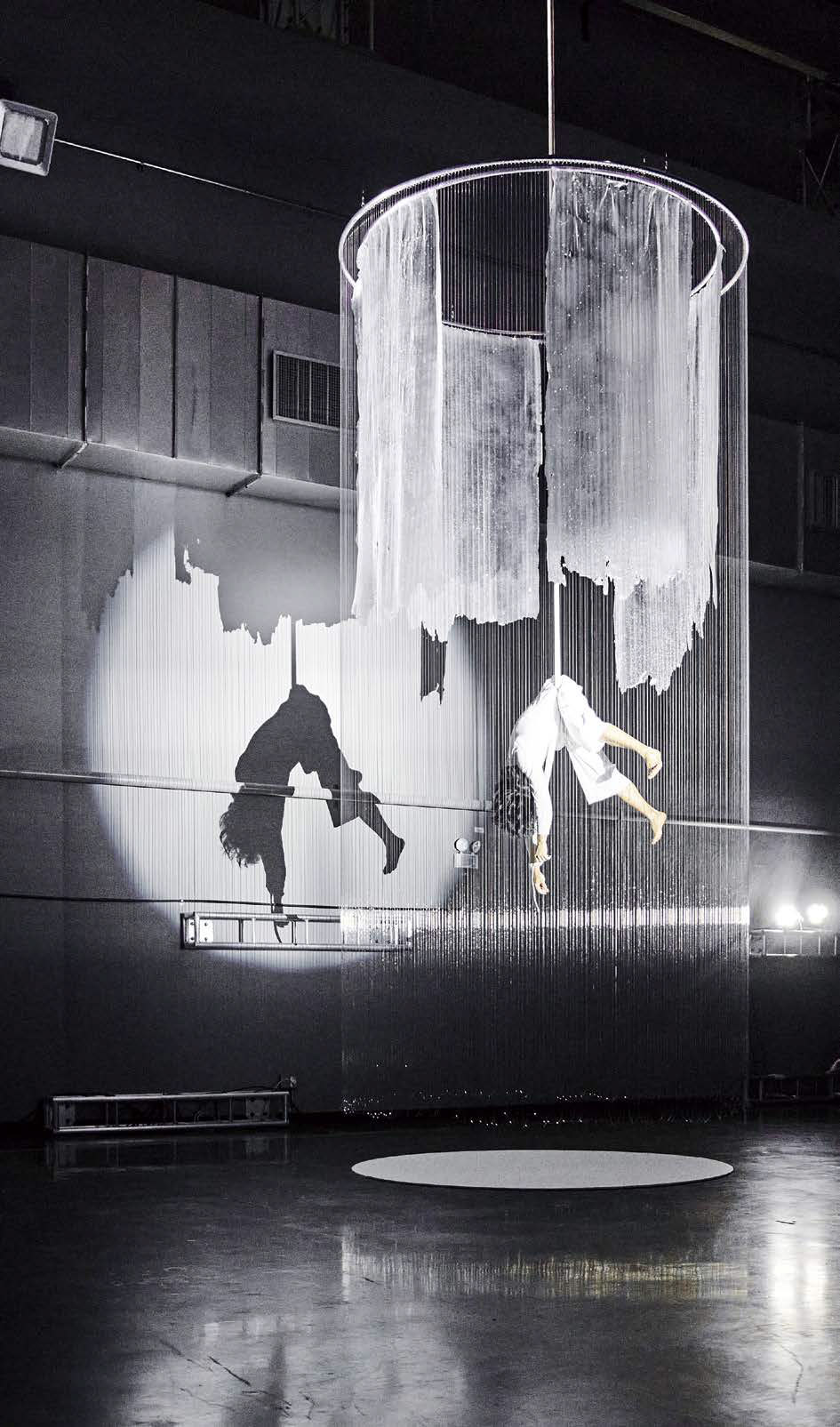
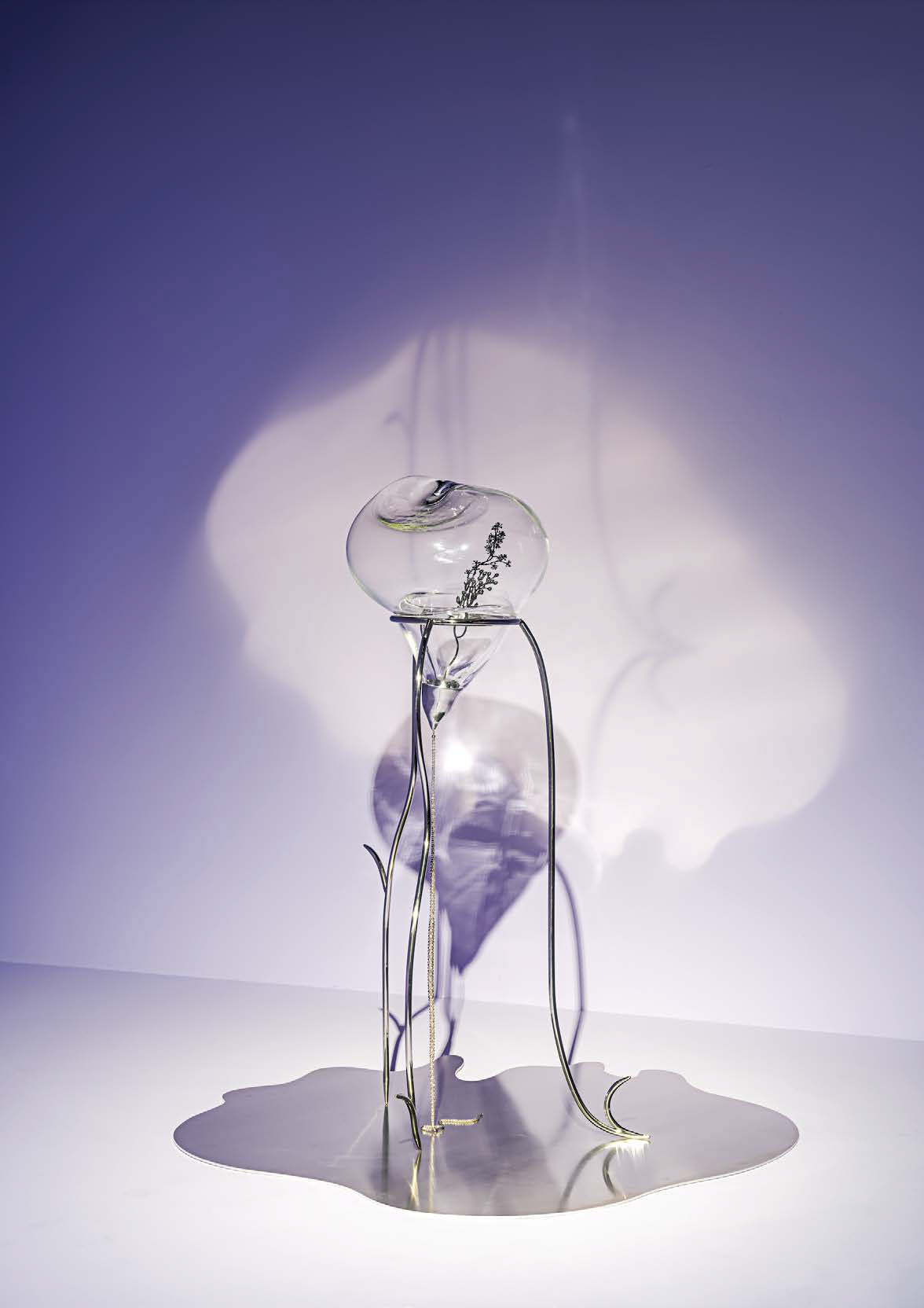
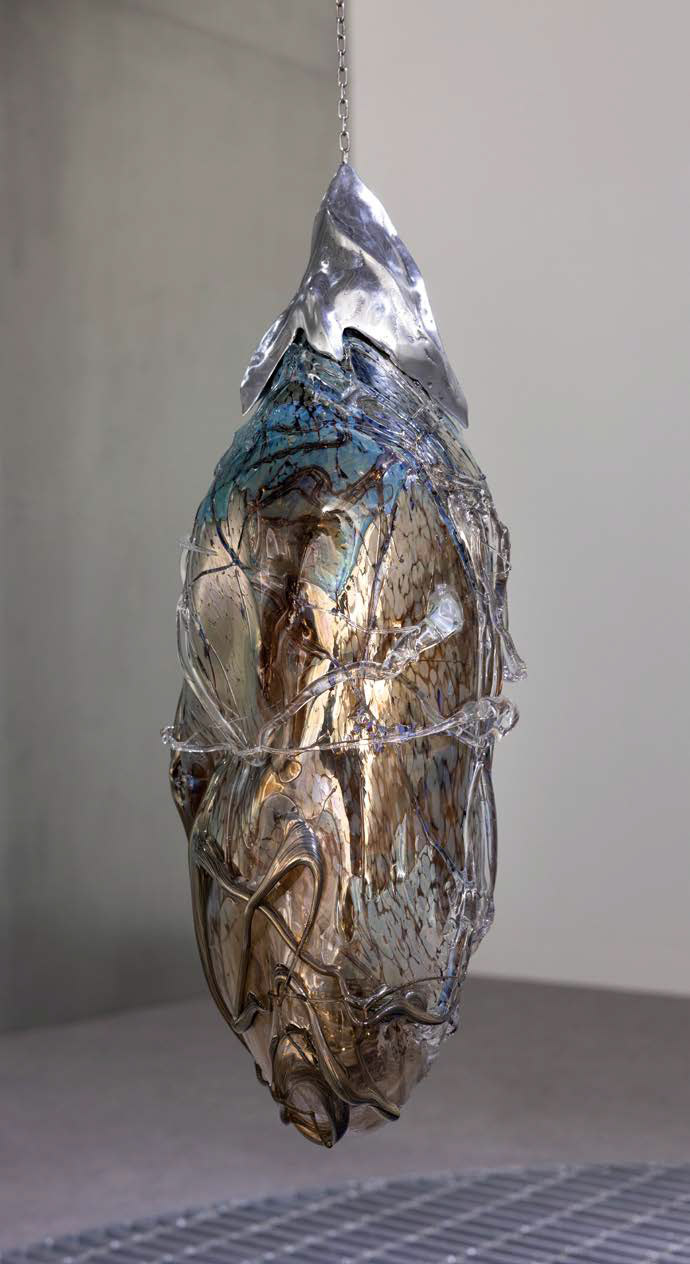
The narrative surrounding White Meta—the corporation within the world of Memory Searcher that sells memories as currency—was conveyed to Cho’s audience in the form of a live-action VR experience called Barrel Eyes. Meanwhile, the Nudi Hallucination sculptures were designed to resemble the inner and outer workings of the sea snail, the soft and pliable flesh of the mollusk replaced with a glass sculpture of unstructured curves and a resin installation piece spread out across the floor in a manner reminiscent of gelatin. Surgical steel chains and metal elements such as stainless steel and silver took shape as twining arches to furnish the sea snail with antennae. Within the transparent glass that served as the sea snail’s membranes could be seen the branches of vines which constituted the elongated fibers and nerve cells of its neurons. If the meaning behind the replica holds true, here also lie memories capable of undergoing transference. This metaphor for the flesh of the sea snail made incarnate as sculpture—this peripheral consequence expanding the horizons of perception—lends visibility to the substance at the heart of memory.
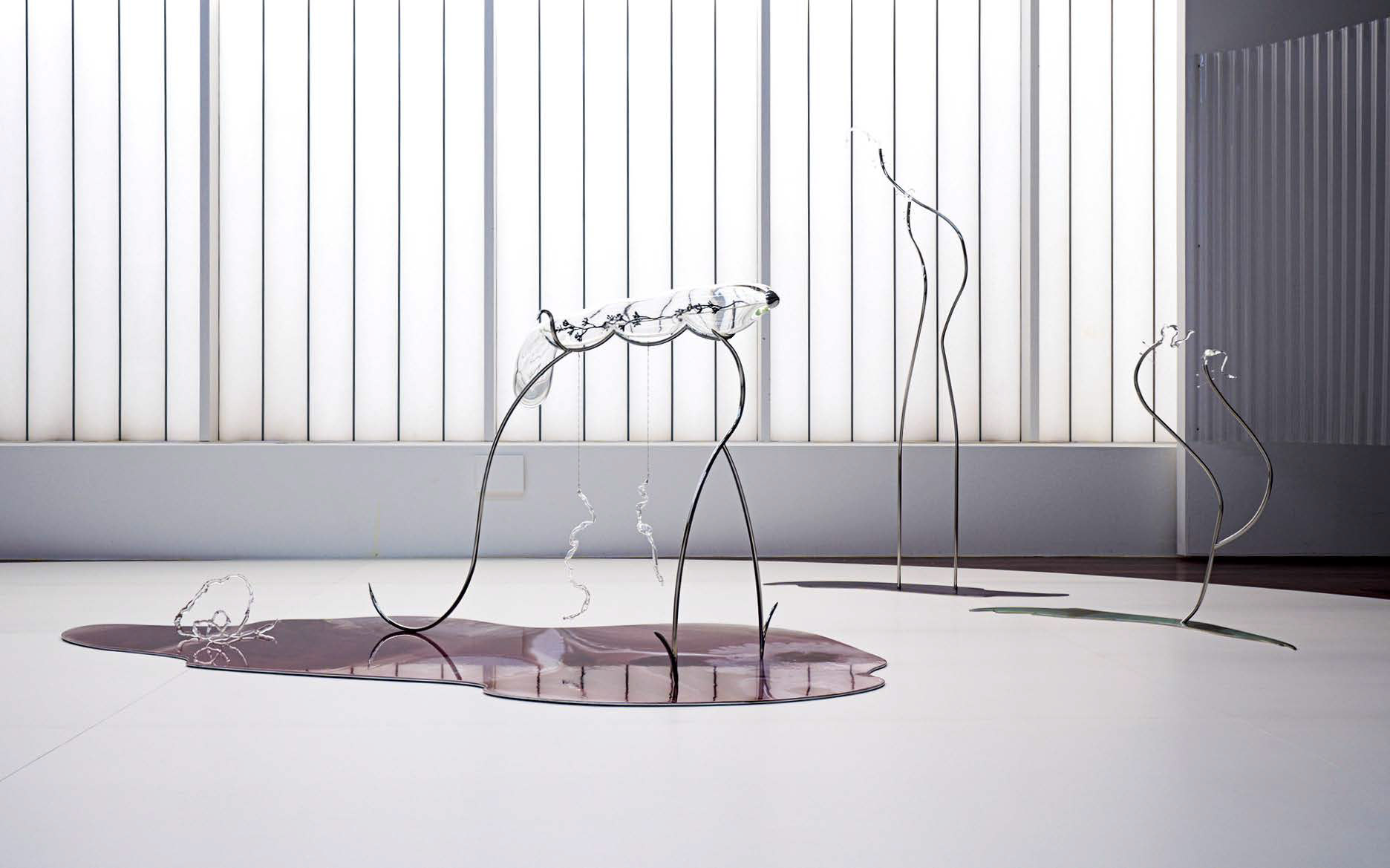
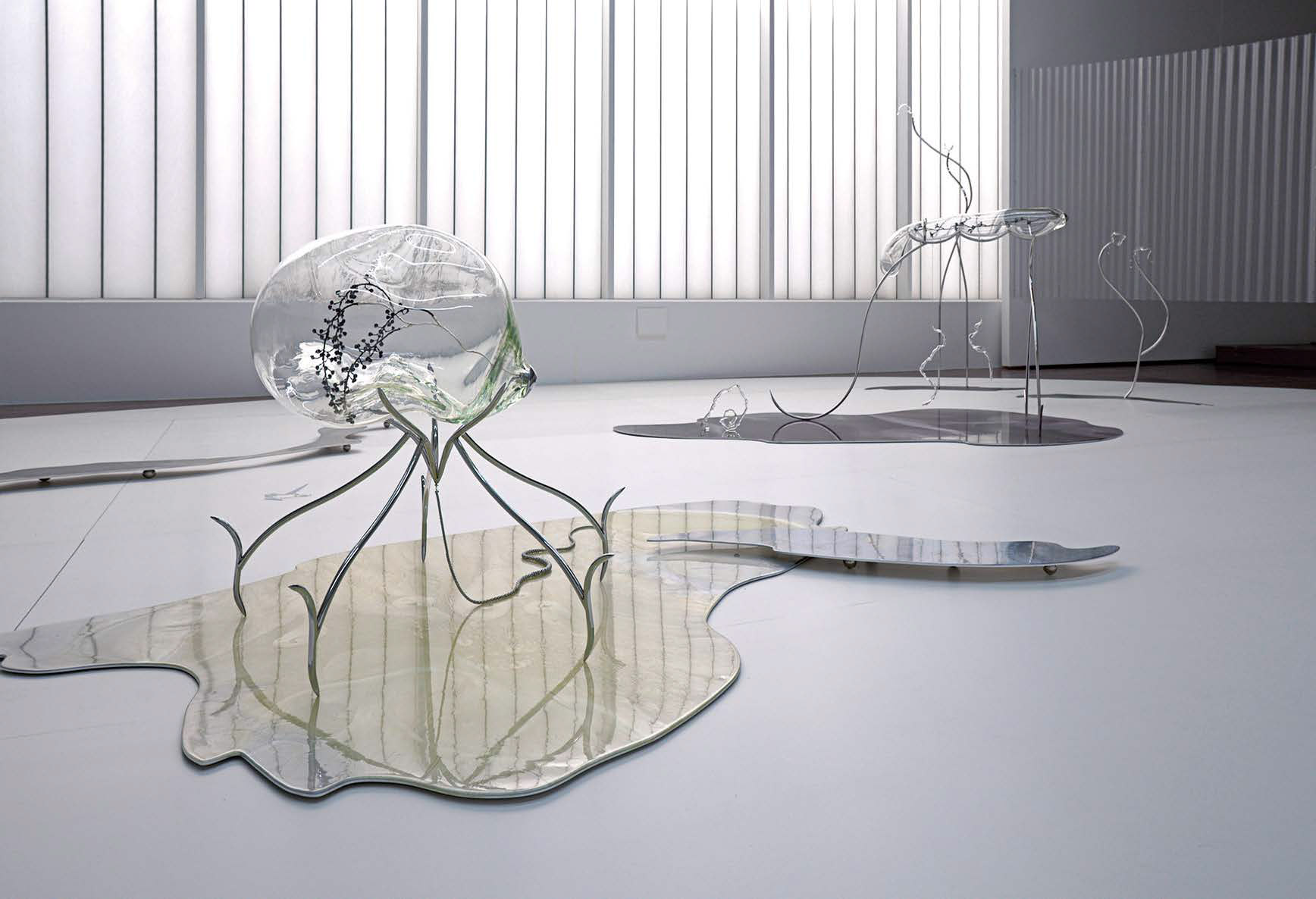
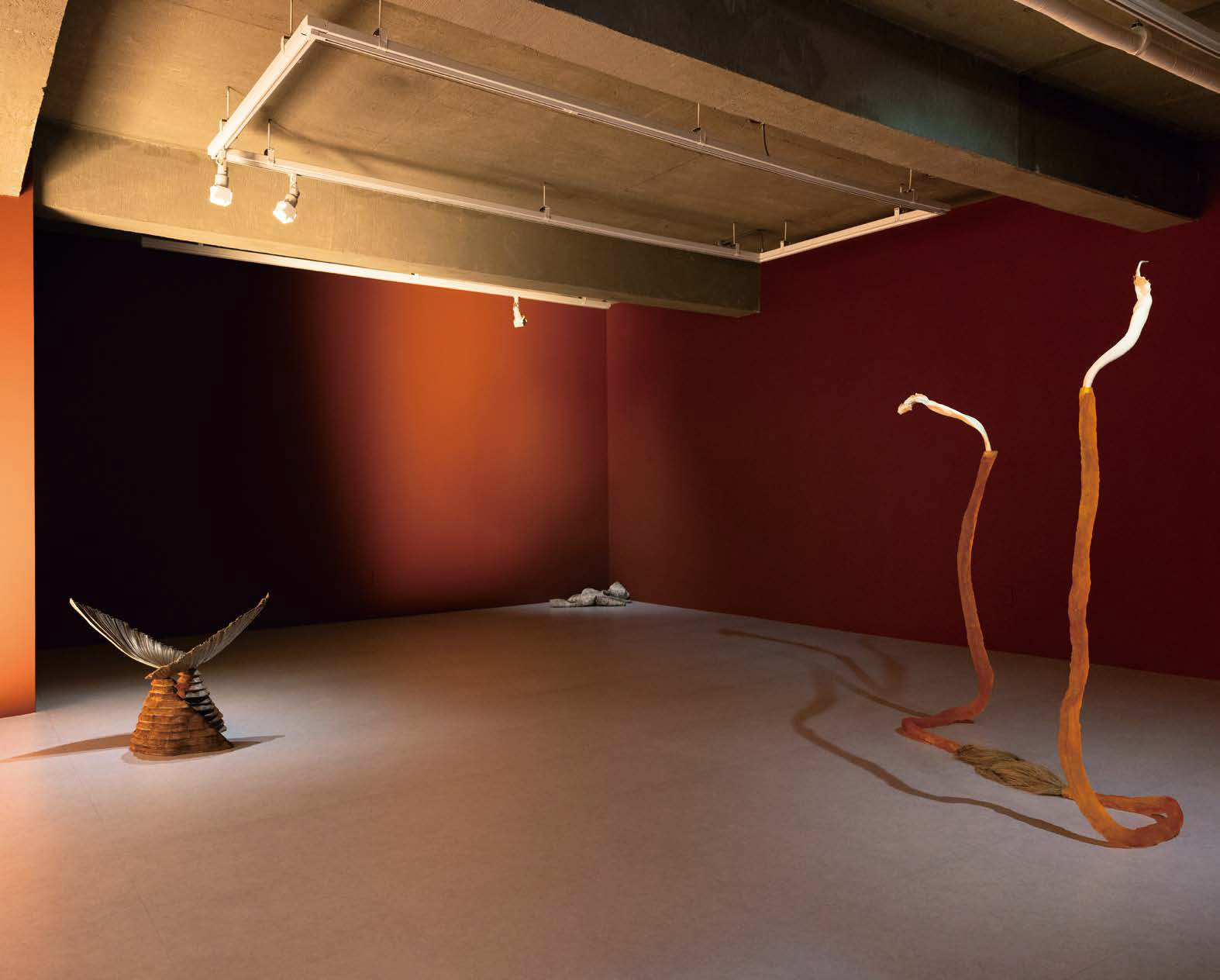
The following year, Cho further developed the concepts driving Nudi Hallucination through Altered Fluid, which envisioned a certain type of species emerging and surviving on a post-apocalyptic Earth. The artist postulated life after humankind in its current state, substituted glass and metal for its flesh and bone, and showcased it as a futuristic bio-sculpture. These life forms turned half-solid, as if unsealed in an environment operating under different temperatures, thereby becoming able to move about at will. Indeed, bringing to mind the fact that Cho’s method of creating her sculptures has involved using molten liquid glass and metal, such presuppositions reside within her artistic macrocosm as a matter of course. Thus are wrought the attributes of future flesh to replace mere proteins. Reminiscent of primordial Paleozoic organisms as if circling back to history yet disparate from them in terms of species, these life forms no longer exist within the parameters of established human knowledge and intellect. They instead give us something germinated with a new sort of brain, a different sort of heredity and a different set of evolutionary information.
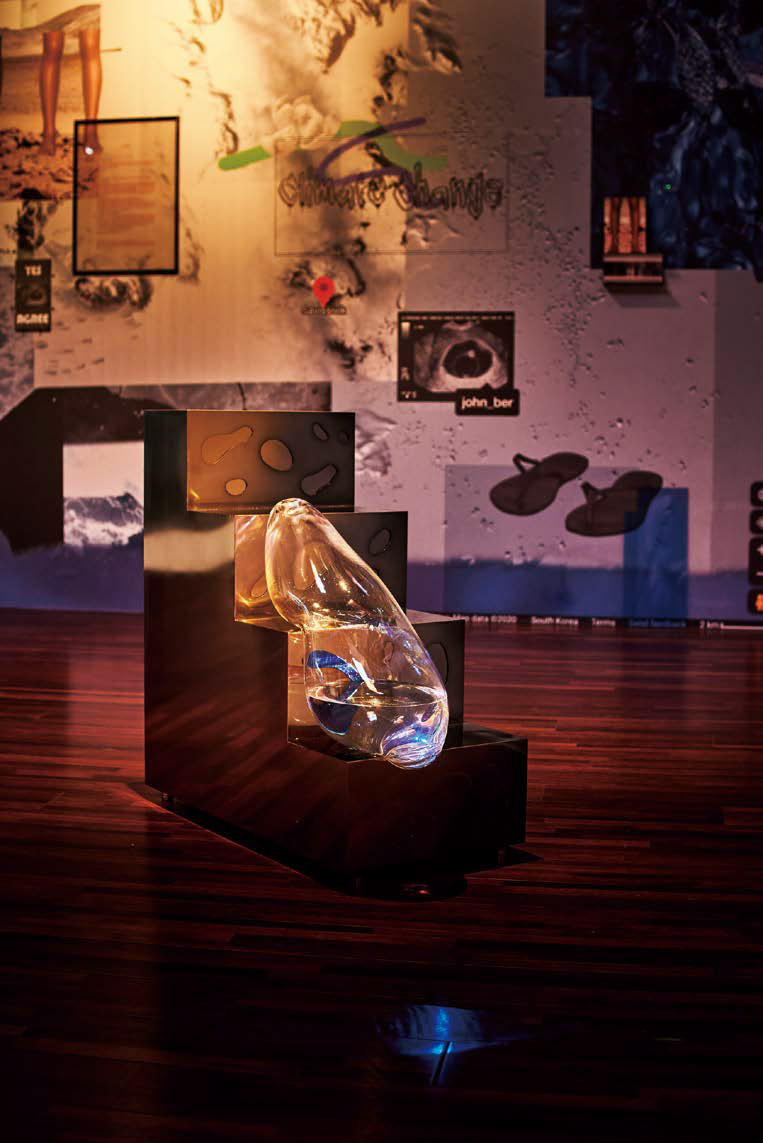
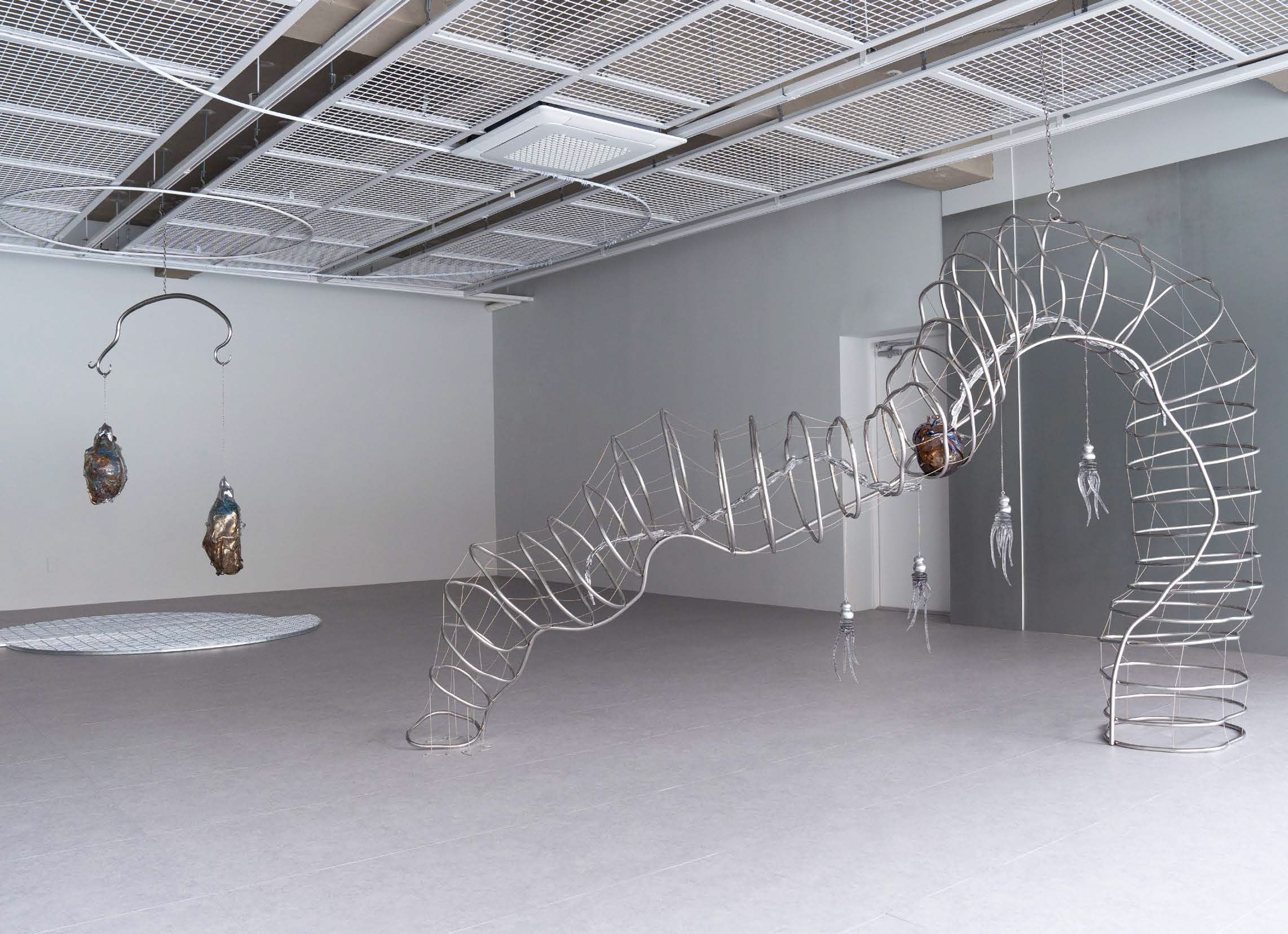
Images of that which does not exist in this world, traces of the memories that have slipped through the gaps in the net—such is the stuff of Cho’s imaginings. At some point, we sense that we, too, have come to take part in a journey where it would seem as though vacated memories and a future yet to materialize have traded places.
*This publication was supported by Ministry of Culture, Sports and Tourism Republic of Korea and Korea Arts Management Service
1 Omyo Cho, The Trace of Things Unmentioned (Waterain, 2018)
2 Ibid, 103.
3 Exhibition held as part of Artist View of Science 2022, co organized by the Soorim Cultural Foundation and the Korea Institute of Science and Technology (KIST)
4 Rosalind Krauss, “Sculpture in the Expanded Field,” October Vol. 8 (1977): 30-44.
© (주)월간미술, 무단전재 및 재배포 금지


