

정희민 Heemin Chung
A Gentle Jab at Sculpture: Jihyun Jung’s Objects,
Quietly Diligent and Nearly Invisible
Hye Jin Mun Art Critic
Artist
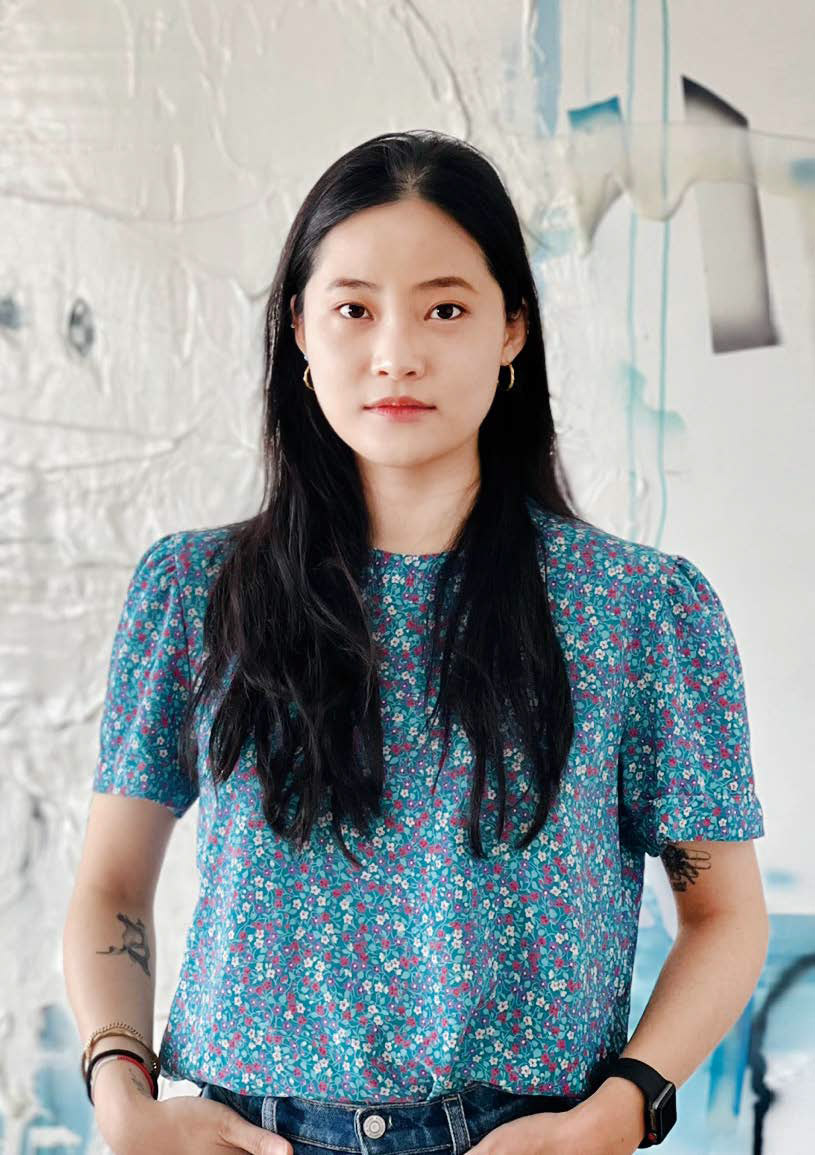
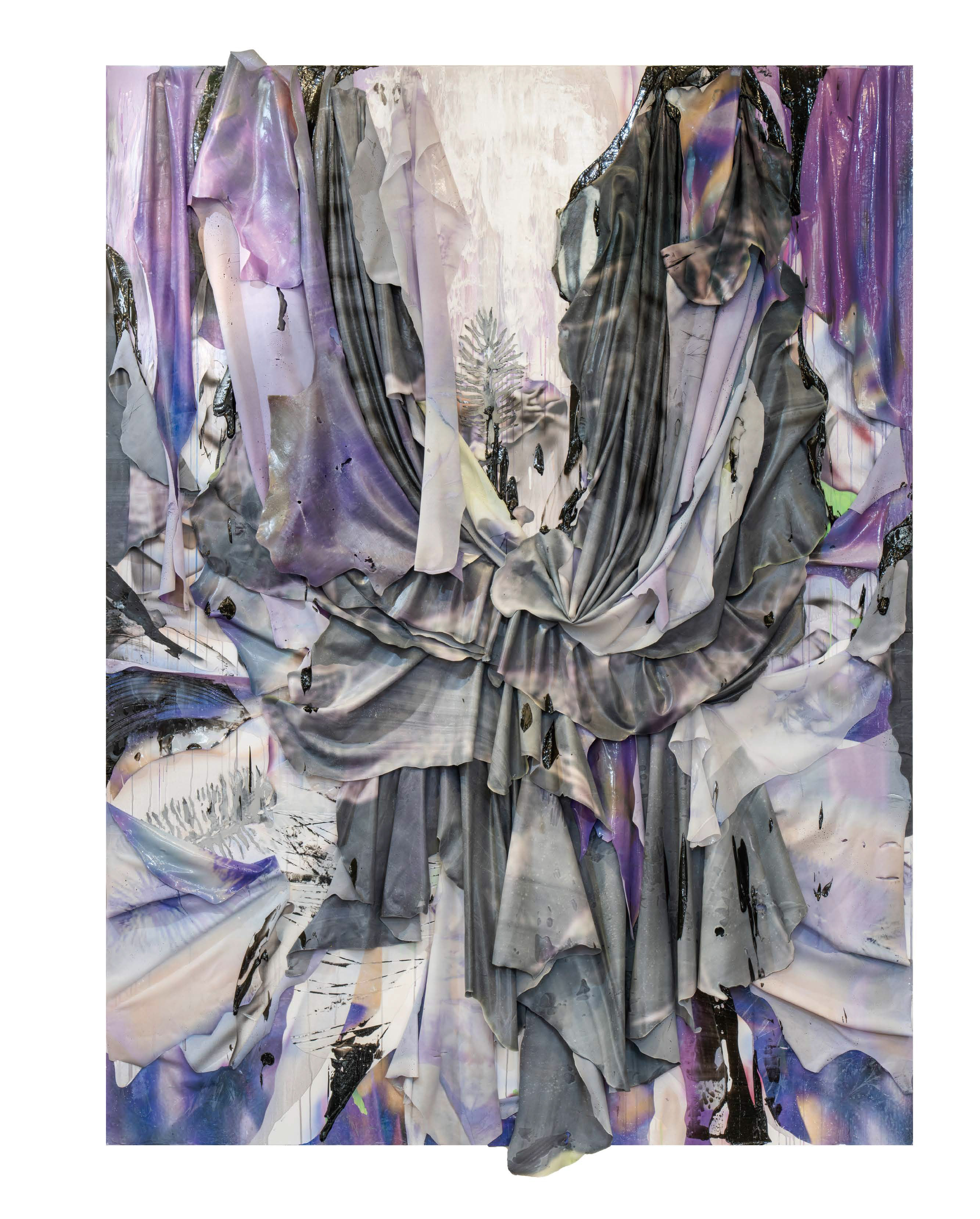
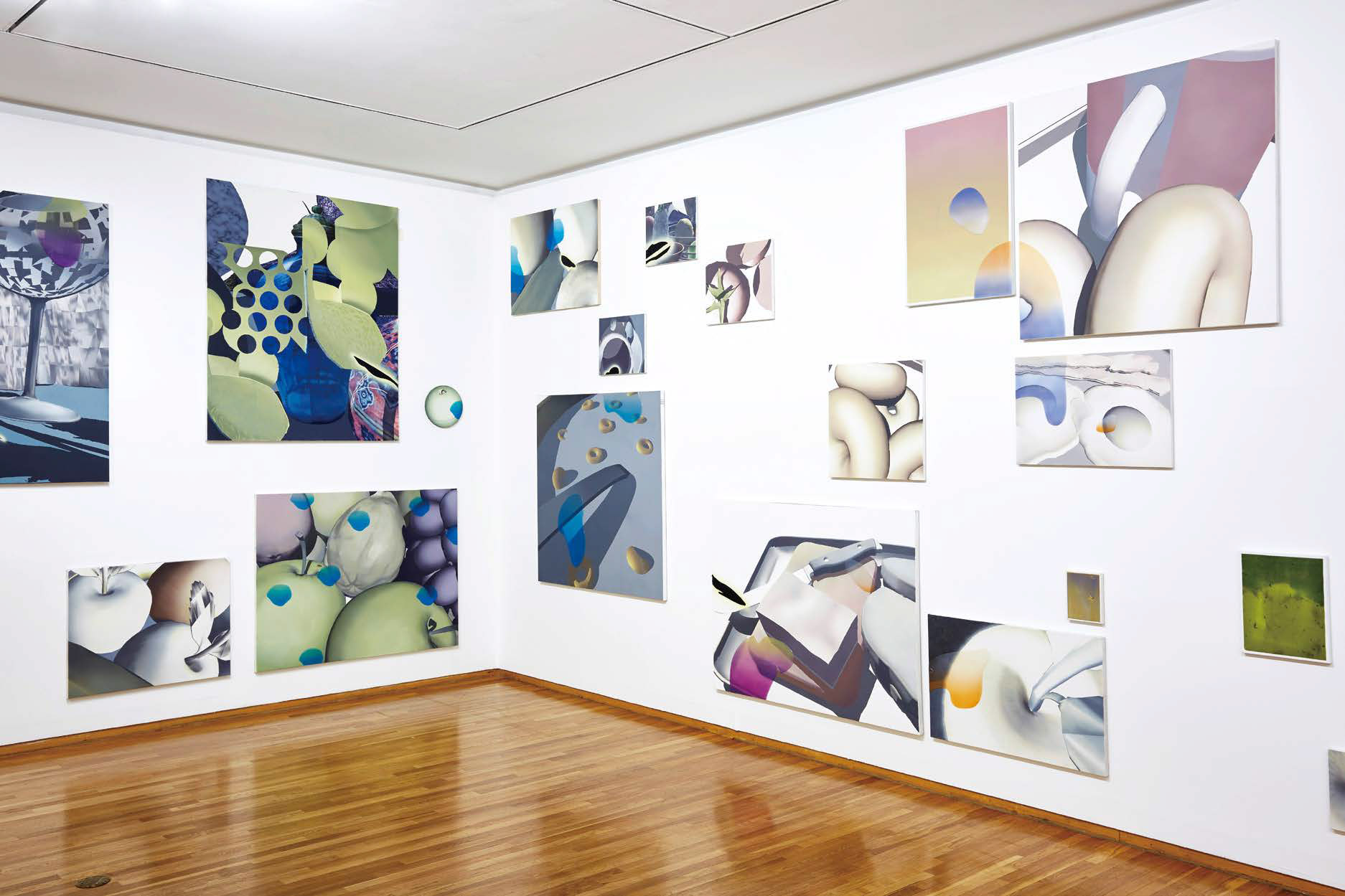
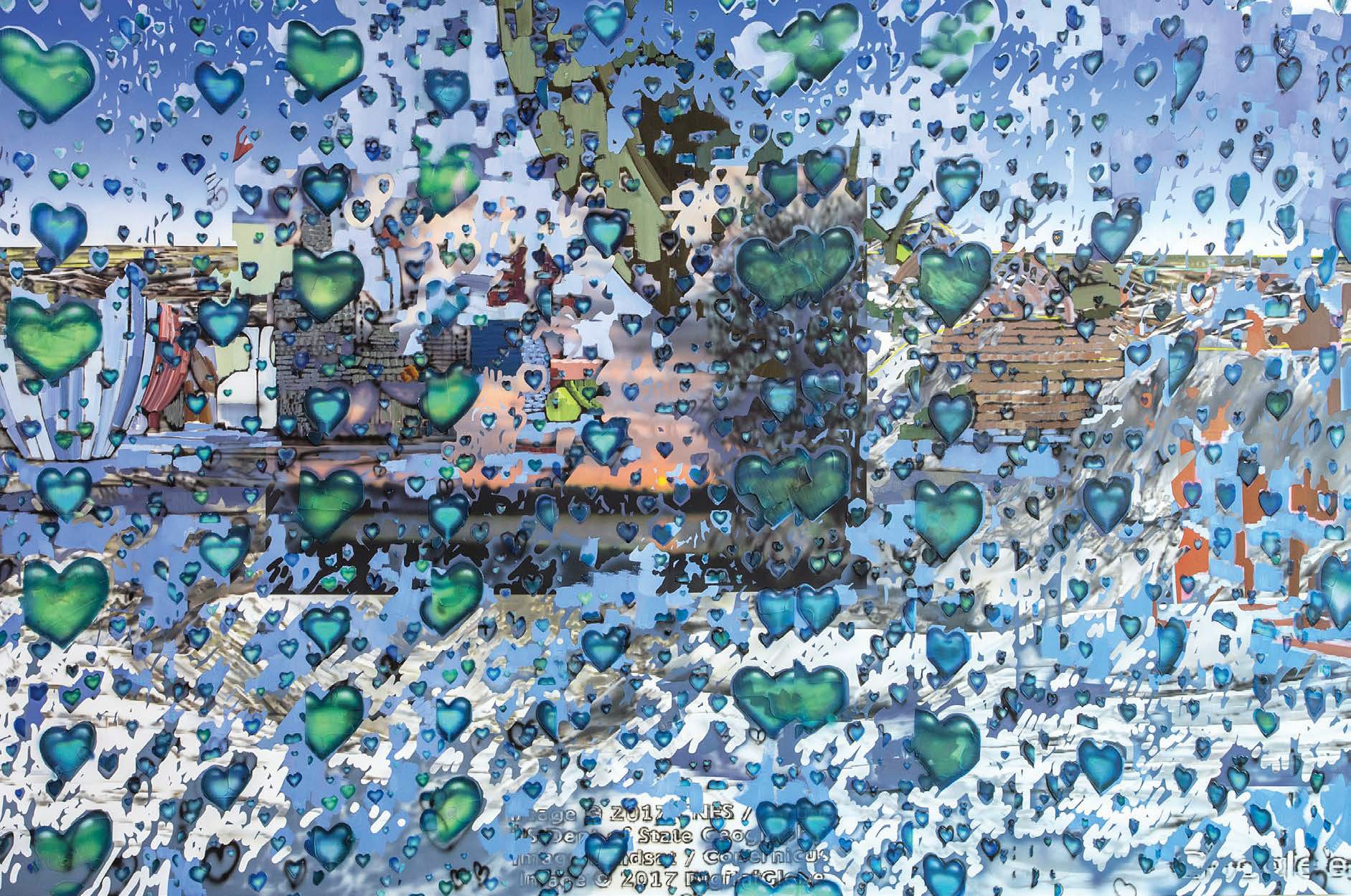
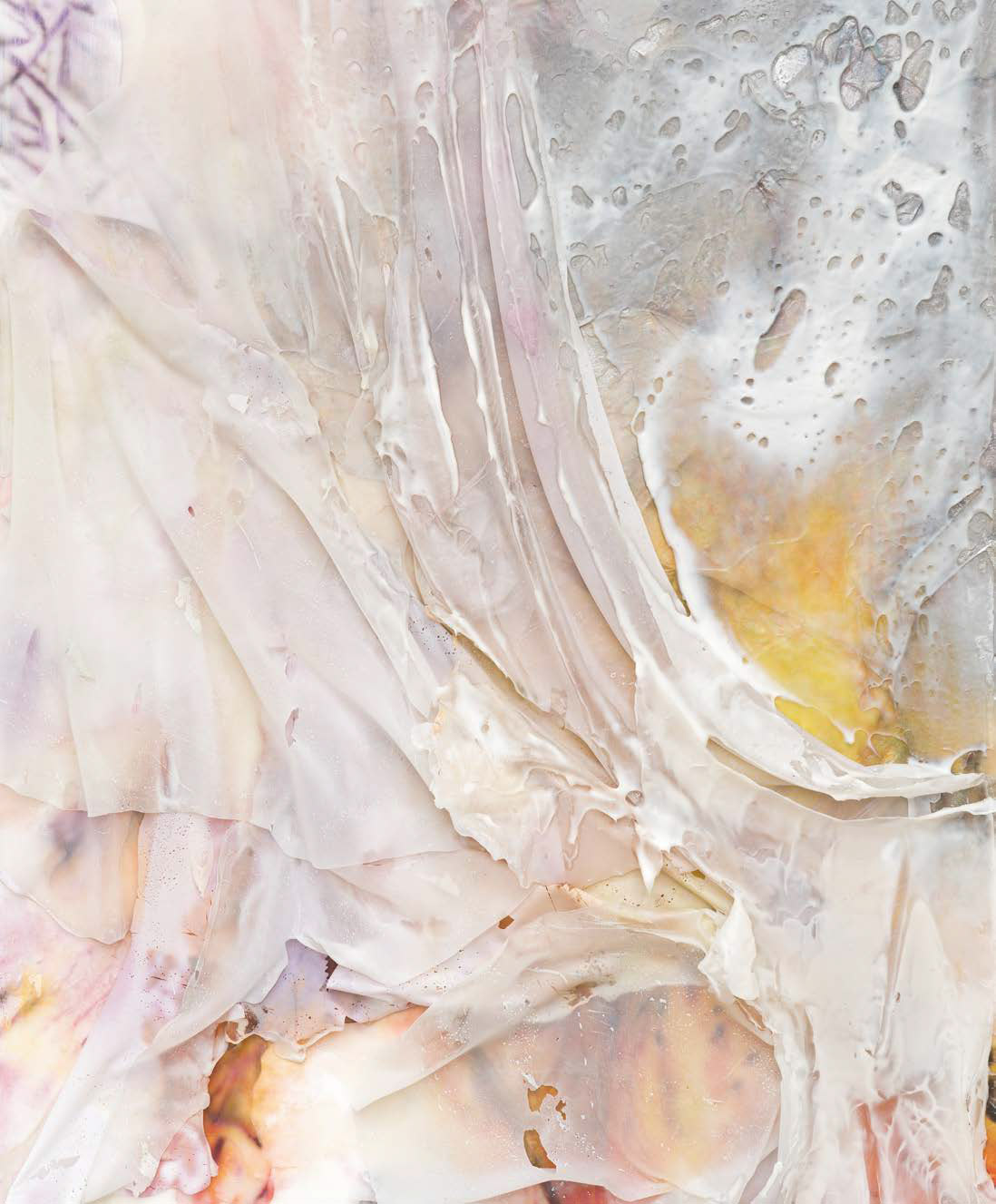
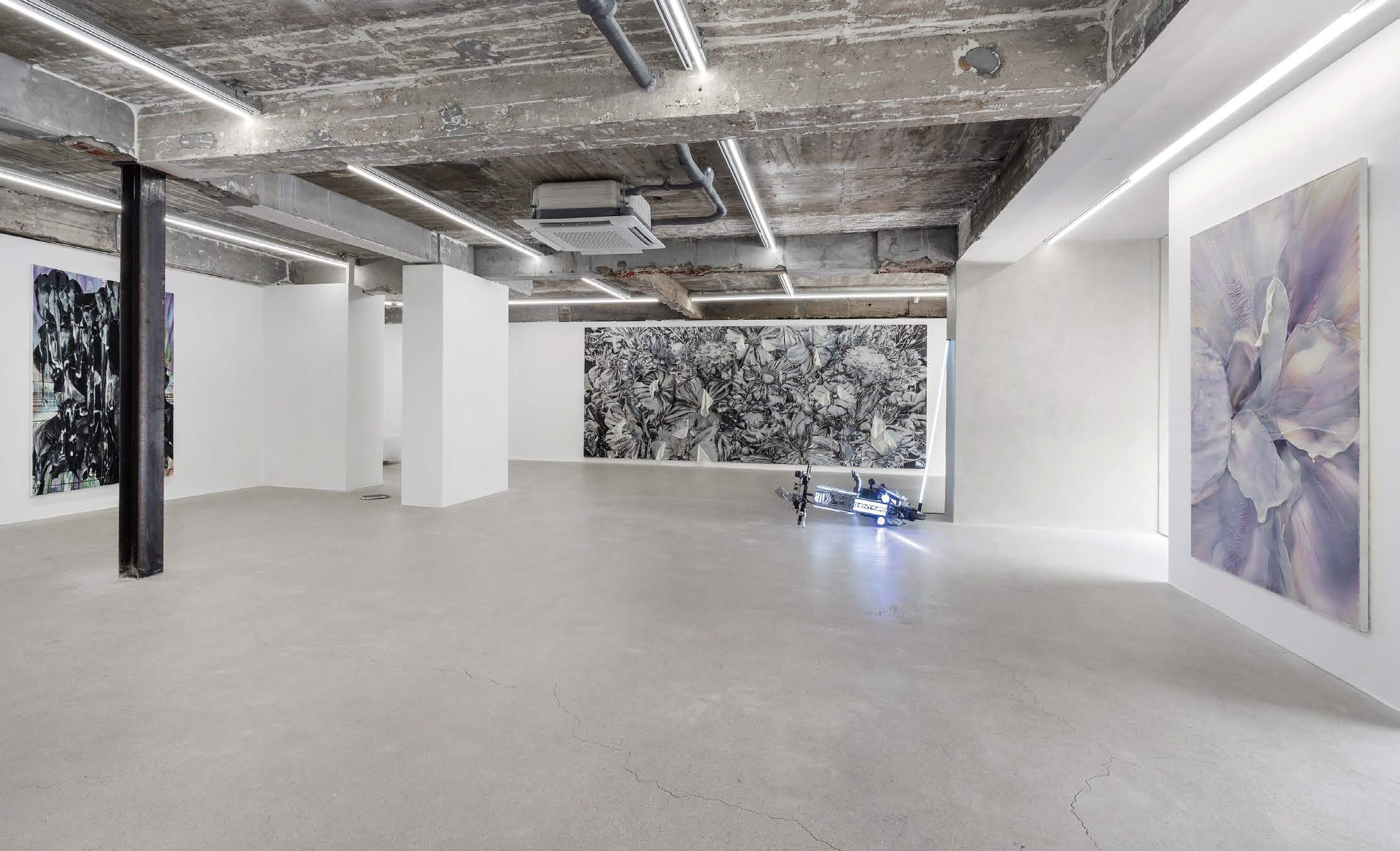
Heemin Chung/ b.1987 Jung Heemin is an artist based in Seoul. Through an intensive exploration of the pictorial plane, Jung presents paintings that investigate the multiplicity of contemporary visuality by actively colliding, diffracting, and integrating diverse media—such as 3D technologies, airbrush techniques, and gel mediums—onto the canvas.
Heemin Chung’s Affective Paintings and Contemporary Perception
Hye Jin Mun Art Critic
The trajectory of Jihyun Jung’s work largely bisects into two phases at the juncture of his exhibition entitled Gomyeomseom, which was held at Doosan Gallery in 2016. The early works which constitute the first phase mainly consist of small objects crafted in an ad-hoc manner out of discarded items gathered by the artist. Invoking a scene in a Tim Burton film, Jung’s world of fancy made from absurd and alienated objects is filled with kinetic sculptures that operate with frenetic energy. In Words Left Unsaid (Gallery Skape, 2010), the artist constructed a bizarre world in an empty space above the exhibition hall ceiling, one reminiscent of Goya’s etchings or of dark fantasy horror, while in Away from Here (Project Space Sarubia, 2011), he created a secret room by raising freestanding walls inside the exhibition space. Bird Eat Bird (Insa Art Space, 2013) utilized the three-storied architectural structure of the exhibition hall to install a maze in the basement. What ensues is an eccentric paradise of waste, where rusted cans squeak out the sound of crashing waves, animal jawbones rattle as they hang from notebook spring bindings, and the legs of toy horses scrape and rattle against a scrubbing board. These pieces have often been decoded in narrative terms such as an escape from the violence of reality, an endeavor to carve out alternative possibilities, or an attic of reverie. While such interpretations do in some sense provide an apt delineation of the characteristics of Jung’s early work, the role of the story is in fact hardly foundational. For Jung, the story is more a device for the sake of effective delivery; what holds greater significance to the artist is the creation of an artificial yet wholly plausible phantasmagoric space.
Said interest in artificial worlds ultimately paves the way toward the artist’s identity as a creator of things. The accumulation of discarded objects is a far sight from a critique of modern civilization, a Benjaminesque summoning of the past, or a construction of an archive. The artist collects and cobbles together sundry objects one by one because he discovers certain formative points of fascination in what appears to be trash. Jung has always been drawn to concrete things made by hand, finding joy in the process of combining the colors and shapes of different objects. Reconfiguration—where an object (or part of a particular object) is removed from the context of its original use and given a new role—remains a key characteristic which we discover throughout the entirety of Jung’s catalog of work. Rather than create something entirely new, Jung’s method consistently revolves around recycling what already exists to transform what they stand for, or situating already completed objects in different contexts to reveal them in another light altogether. For example, Nobody Knows Where (2012)—an early piece produced during his stay in London—is a boat made from trash that had washed up on the banks of the Thames and was afterward set back adrift on the river. Seven years later, he submitted Infinite Metal (2019) to the Multipurpose Henry (Maison Hermès Dosan Park, 2019) exhibition, creating a geometric beauty of form out of waste materials collected from the construction site of the Platform-L Contemporary Art Center. It is also a common occurrence for Jung to recycle his previous work. The legs that lugged around Night Walker (2013) were transformed into the legs for Rock Book (2018) as part of the One-A-Day (Art Sonje Center, 2018) exhibition and the wooden panels used as performance/installation materials at the 2016 Gwangju Biennale were repurposed to form the pedestal for Caught Sleeve (2023) in the Hangdog (Art Sonje Center, 2023) exhibition. Likewise, structures from previous exhibitions held at the site are often repurposed as materials in Jung’s installation works. In One-A-Day, the Entrance and Floor (2018) piece was sculpturally composed from the carpet of a preceding exhibition, while in Hangdog, the freestanding wall from a prior exhibition entitled Suh Yongsun: My Name Is Red (2023) was reused as a slanted pedestal.
Towards what does this endless rearrangement, reconfiguration, and recycling ultimately orient itself? The methodology of ‘re-’ is the way in which Jung gives voice to his perspective of the world. In this context, speech should be viewed not as a straightforward argument or opinion but rather as an attitude that each one of us cannot help but adopt in life regardless of who or what we are. The artist likens his stance to that of an ‘amateur.’ Unlike the professional who must do one thing or another as part of their line of work, an amateur is someone who engages in doing something out of enjoyment. As someone in love with the act of creating, Jung enjoys reexamining objects when they become something other than an object. Finding pleasure in making the familiar cliché unfamiliar, he prefers refiguring what already exists over creating something entirely new. Worth noting is the fact that the process holds just as much importance as its result. The act of reviving objects that have already served their purpose is itself as significant to the artist as formative reconstruction or the establishment of conceptual meaning. This is why Jung’s early work is predominantly kinetic. Imbuing a still object with movement brings it to life. Instead of creating individual objects and putting the results on display, it is of greater import for the artist to convey how and what he reimagines and remakes. The unique manner in which Jung packs his exhibition spaces with pieces is relevant to this point. Jung’s intent lies not in the formativity or message of each individual work but in the approach to production that emerges through a multiplicity of works. The artist saying “I tried to allay message with landscape” suggests that the repeated disclosure of distinct positions, viewpoints, and affect hold greater significance than the individual objects themselves. If the motivation behind the work is a love for creation and the methodology of production is reconfiguration, what then is Jung’s precise perspective on the world and on objects?
An artist who communicates through actions rather than words, writing in which Jung himself reveals the bearing that he takes into his work process is few and far between. The artist’s notes jotted down during the creation of Thames (2012) accordingly furnish us with a rare glimpse into Jung’s stance on the world and on objects. This piece spans 153 drawings which seem very much alike and are yet all slightly dissimilar in their record of Jung’s daily documentation of the flow of the river along the banks of the Thames for a minimum of 30 minutes every day during his stay in London. The repeated repetition of this simple labor—more akin to a practice than a portrayal—strikes us as utterly futile, yet in this repetition of seemingly futile acts proves to have surprising value. A prime example of this can be found in Paper Drop Device: Little Heavier Than Before (2014), showcased at the PLATEAU Samsung Museum of Art. At the ring of a bell every eight minutes, a set portion of paper lightly marked with graphite would fall to the floor. The degree to which the graphite smudged the paper was a coincidental encounter between timing and device, but depending on those small misalignments, the letters engraved on the paper could either turn out visible or invisible. The sheets of paper, which become slightly heavier or lighter depending on the amount of graphite applied, prompted hollow laughter. This laughter might have been a chortle at the nonsensicality of the result in comparison to the effort invested. Nonetheless, bouts of unexpected reflection were born out of the solemn yet futile act of printing paired with an assortment of playful yet poetic phrases. Pervasive throughout Jung’s work is, there remains a persistent attitude of futility—of striving diligently regardless of one’s success or failure but ultimately acknowledging that the whole affair amounts to very little. Suddenly, A Rainbow (2013), which creates a rainbow with a single spray of water and light at the very last moment; Night Walker (2013/2017), which is assiduous in its blinking and passing by in sync with a pattern of letters or images but leaves no end result unless captured using long-exposure photography; and Rock Down, Rock Up (2018), a kinetic sculpture so slow that we end up uncertain as to whether it is moving at all, offer us humor on par with that of anti-jokes. This humor is light yet heavy, flimsy yet solid. Fluctuating between passivity and proactiveness, indifference and enthusiasm, and self-deprecation and hope, the middle ground represents the approach of an interventionist observer maintaining their distance from the world while simultaneously viewing it with much more absorption than it would seem.
Jung’s fictional world filled with small moving objects vanishes following the closure of the Gomyeomseom exhibition. Gomyeomseom marks a turning point as it signifies the completion of Jung’s early work and the beginning of a transitional period leading to his later pieces. This exhibition is a farewell stage of sorts which reuses the freestanding walls of previous exhibitions to construct a dramatic independent space and fills it with pile upon pile of the artist’s previous works. The audience roamed freely within and outside the space, repeatedly zooming in and out between works of incredibly diverse sizes. While the miniscule objects placed on display stands required the audience to bend down to peer at them, the distant view through the gaps in the freestanding walls called for a far-ranging gaze. With this dramatic exhibition in which close range and long range views coexisted in operatic fashion, the artist makes his final foray into dark, theatrical configurations of space, stories, or movement. Though movement is introduced as a means of altering the purpose of certain objects, movements that dazzle relegated the piece itself to a stage prop, unintentionally rendering the appreciation of the work a mere flicker of a moment. Instead of slowly and deliberately engaging with the work, one ends up giving it a quick glance and moving on. Afterwards, the artist shifted toward inducing changes in his objects by altering their base materials, surface treatments, or production techniques where he would have artificially cut and pasted objects to transform them. The trajectory of transitioning from landscapes to objects is carried forward in One-A-Day. Here, Jung’s objects both resemble and at times physically encompass the abstract paintings of Seeun Kim showcased alongside them. Objects serve as independent sculptures as well as window frames that transmit paintings or screens that cover a piece and become color-field paintings themselves. This method of drawing a space by responding to the environment and forming a landscape in concert with it is less artificial, yet it remains another form of spatial configuration. However, in contrast with the past adherence to a pre-planned design, spatial configuration now becomes a spontaneous and variable sketch. At the same time, Jung’s objects cease to function as stage props, keeping his paintings company as individual sculptures. Objects with prominent volume, mass, and scale now begin to pepper themselves with questions as fully-fledged sculptures.

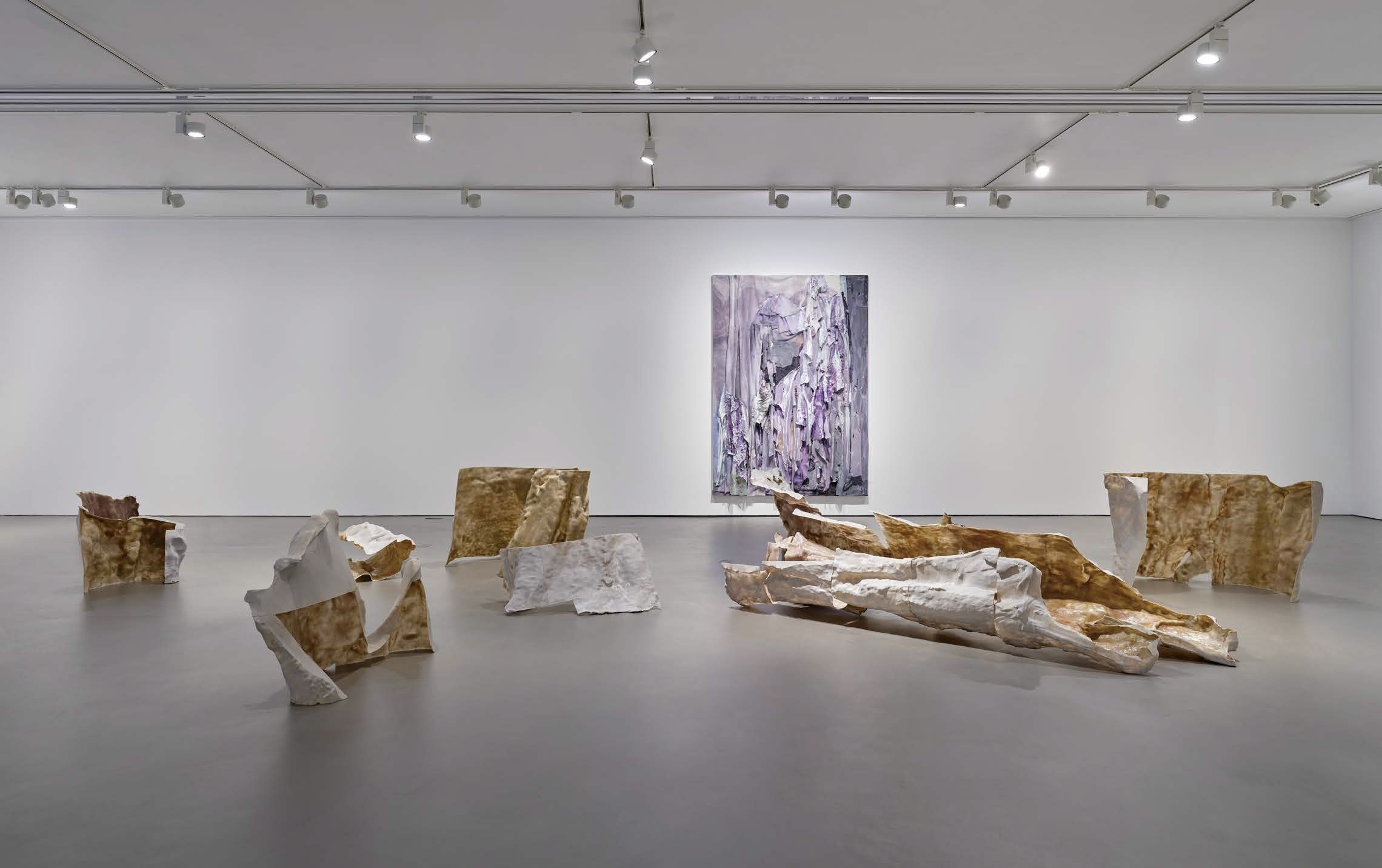
The venue that affixed the official seal to Jung’s shift was Multipurpose Henry (2019), held at Maison Hermès. This exhibition, along with Gouge (Incheon Art Platform, 2022), demarcated the vantage point over the latter half of the artist’s work, signaling an alteration in focus from well-organized landscape composition to experiments with sculptural media. Most of Jung’s pieces now involve masses with volume and weight, the use of waste material has undergone a significant reduction, and the properties of the objects change with minimal intervention. This transformation is especially evident in Gouge, which reinterprets traditional sculpture by incorporating automated technologies such as 3D scanning and 3D printing. From grinding, dividing, changing perspective, and stacking to surface lifting, altering materials, and printing, the artist’s interventions—which fly in and retreat as lightly as a boxer’s jab—are lively yet more substantial than they seem. For instance, grinding and dividing were applied to Boots (2022), which turned the legs of a mascot upside down. Here the artist reveals properties typically concealed in traditional sculpture practices. The surface of Boots, as colorful as a multi-layered painting, is the result of grinding down the FRP outer shell and putty heaped on to conceal the primary colors of the 3D printed product. The inverted legs are composed of masses stacked at a slight angle. Although in fact produced in separate pieces, the camouflage of the sculpture is designed to hide the joined areas when completed, yet this duplicity is suddenly exposed due to the gaps created through the haphazard stacking process. Swept (2022), which appears wide from the front but flat when viewed from the side, explores the properties of sculpture that prevent it from being fully grasped from a single perspective. Torso from Afar (2022), a segmented print output of the scan data from A. Maillol’s La Rivière (1943), addresses the discrepancy between surface and interior. Each of these pieces pokes sculpture in the side from a different entry point. The rebellion is not overt, but it is pointed enough to make us flinch in surprise.
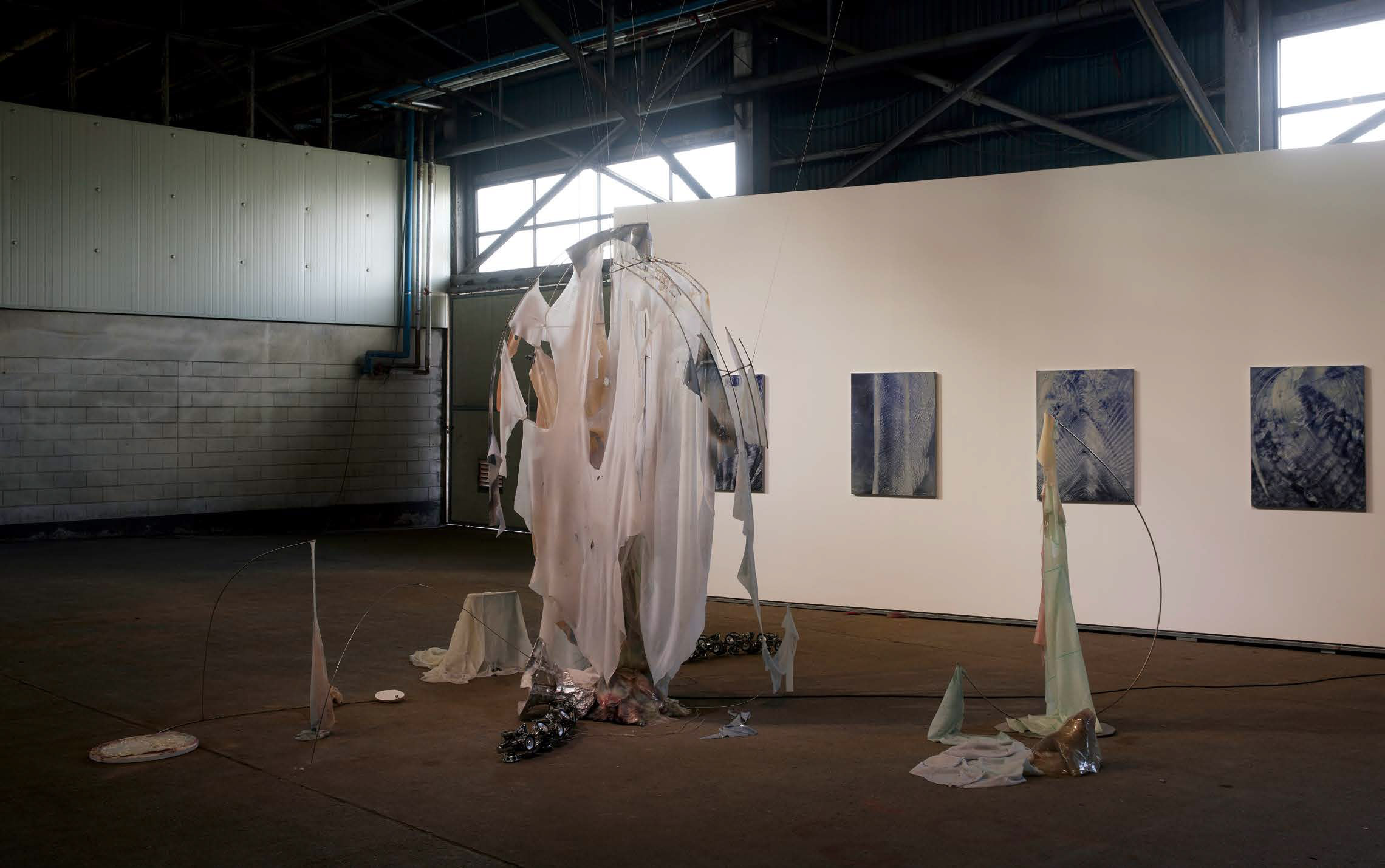
The recent trend of tackling the question of what sculpture is head on seems to have begun with installation and led back to sculpture. The differences are of course in many ways self-evident, but Jung’s unique tendencies maintain a substantial presence. The urethane foam sculpture Myall River (2019)—a copy of the artist’s body clad in work clothes—is a shabby version of the modern sculptural masterpiece La Rivière. It is no easy feat to suppress laughter the moment we catch sight of the light flashing and smoke rising from behind the crude sculpture with its arms raised in awkward form. The undeniable low-grade aesthetics are no different from the time when Jung used rusted cans to elicit the sound of fake waves. In the context of quiet nitpicking, a common thread runs through the slapdash boat made out of Styrofoam (Nobody Knows Where), the electric motor that looks completely intact from the front but secretly wields the extreme melodrama of sentence such as (“You are as many tears as I have shed”) (Night Walker), and the concrete pile of hands stolen from a raided statue in the middle of the city and stacked like fish (Filing Public Hands [2018]). On the other hand, a steady if not immediately noticeable repetition still persists under the surface. Although it is not made explicit due to the artist’s emphasis having shifted from action to formation, the difference wrought through conscientious repetition remains an important feature in Jung’s recent work. The differences that arise out of Hangdog, which is in itself a repetition of Gouge, elicit a considerable degree of fascination. Torso from Afar, showcased in Gouge, repeats thrice over in Hangdog. The first repetition is the same as the original, the second occurs partially, and the third occurs through color changes. Torso from Afar becomes From Afar (2023), and then Far (2022). The shell that coexisted with the scaffolding disappears in the second repetition, and the sponge stripped down to its bare core turns yellow in the third. As the duplication repeats, the differences grow; as the distance in the appearance increases, the title of the piece also deviates farther and farther from the original. This landscape of that which is ‘farther and farther’ turns even more slovenly and crude as it progresses exhibits a strange correspondence to the course of the macrocosm of work that continues to question itself and exert pressure on tradition and the world as we know it in an increasingly bold fashion.
*This publication was supported by Ministry of Culture, Sports and Tourism Republic of Korea and Korea Arts Management Service
1 Interview with Heemin Chung, 31 August 2024
2 One critic has dubbed Chung’s flower paintings—proximate to relief and yet rooted in the plane—a ‘non-flat.’ See Namsee Kim, “Heemin Chung’s Non-Flat,” 2023 Seoul Art Space Geumcheon Archive (Seoul Foundation for Arts and Culture, 2023), 194.
3 Interview with Heemin Chung, 1 September 2024
4 Interview with Heemin Chung, 1 September 2024
© (주)월간미술, 무단전재 및 재배포 금지


